

Sculptra vs Radiesse:
which one to choose for restoring facial volume?
Starting at age 25, collagen production decreases by approximately 1% each year, inevitably leading to tissue sagging, facial volume loss, and reduced skin density. Faced with this structural decline, many patients hesitate between two advanced solutions designed to restore lost volume without surgery.
Understanding the differences between Sculptra and Radiesse is essential to choosing the treatment protocol best suited to your rejuvenation goals.

Why the face loses volume over time
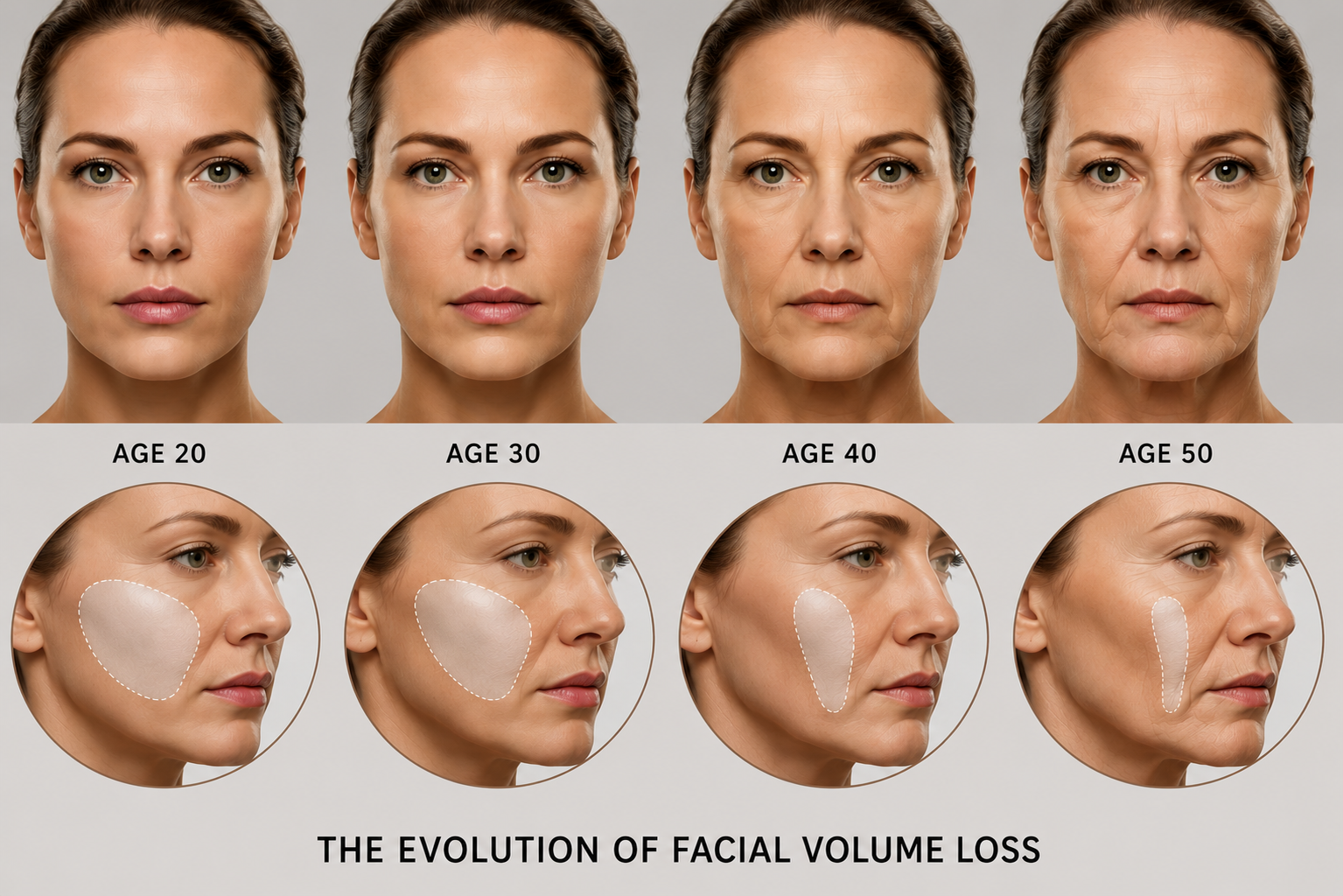
Starting at age 20, collagen production decreases by approximately 1% each year, resulting in fat loss and sagging. Sculptra (PLLA) and Radiesse (CaHA) correct this loss through long-lasting biostimulation or immediate structural support.
Skin aging is an unavoidable biological process. After age 20, our collagen production decreases by approximately 1% each year, weakening the dermal structure.
This gradual decline causes the deep facial fat compartments to shrink. Your face loses its support, the skin thins and sagging becomes increasingly visible in the tissues.
Faced with this annual collagen loss, filler solutions become essential. Restoring lost volume helps restore facial harmony and improve long-term firmness.
Sculptra and Radiesse: two different approaches
To counter this structural decline, aesthetic medicine offers two major biostimulators whose modes of action differ radically.
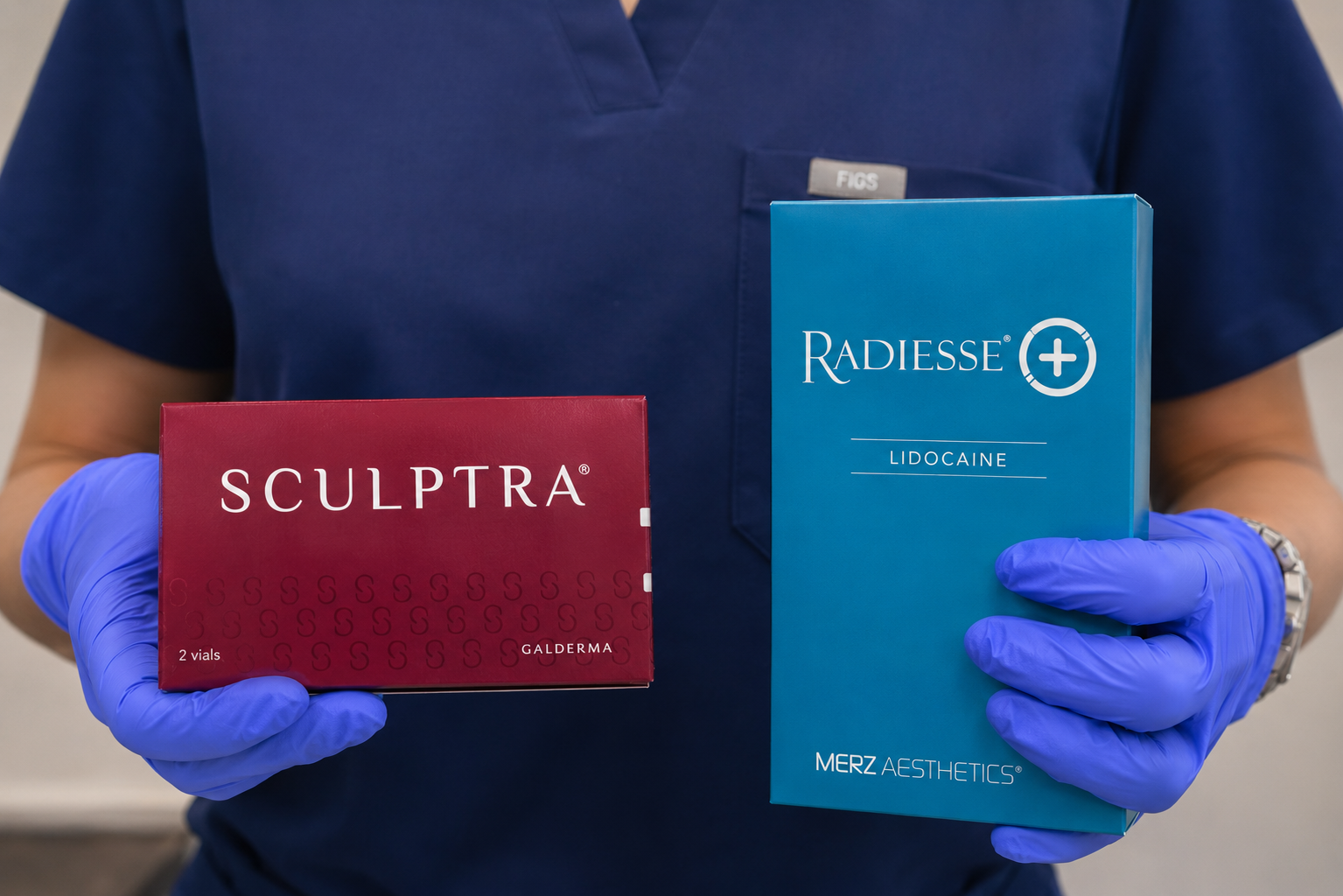
Sculptra: gradually rebuilds volume.
Sculptra acts as a true biological trigger. Unlike conventional products, the body gradually rebuilds its own volume. It is a natural regenerative process.
Results develop gradually. Overall skin improvement manifests over the months. This gradual approach is rewarded with exceptional longevity.
We customize each treatment protocol for your Sculptra treatment at Clinic M.
Radiesse: restore immediately.
Radiesse initially acts as a structural support. It offers a volumizing effect that can be immediately visible in certain areas where structural support is desired.
Secondary collagen stimulation then takes over and helps improve skin quality. The product continues to work after injection for results that develop gradually and improve in the following weeks.
This versatile solution allows for both defining facial contours and improving tissue quality in different body regions, with a variable effect depending on the treated area and treatment goal.
This effective solution for an immediate lift is detailed on our page dedicated to Radiesse injection.
PLLA vs CaHA: understanding the real biological difference
Beyond the visual effect, the true distinction between these two molecules occurs at the cellular level.
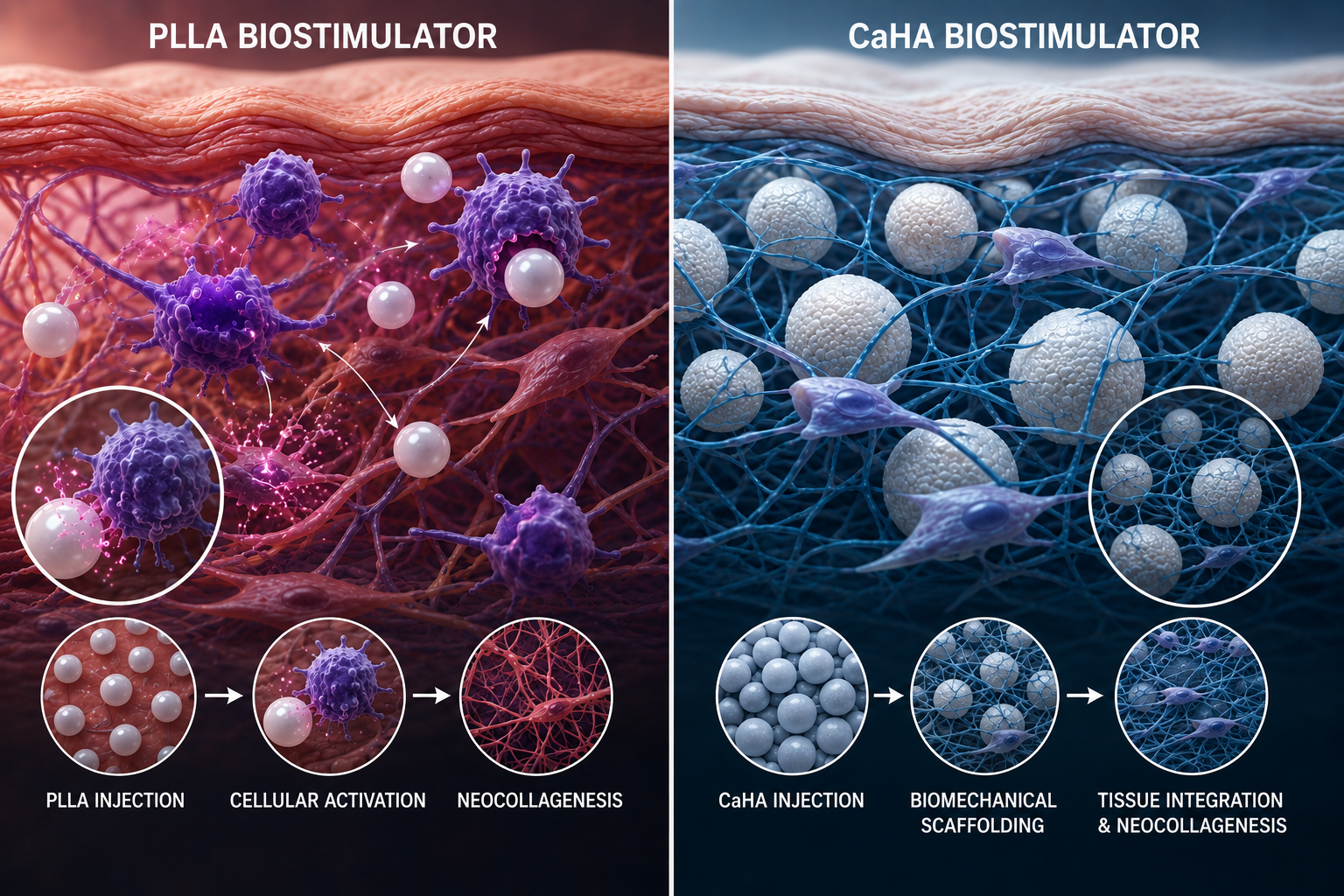
PLLA: controlled inflammatory stimulation.
Poly-L-lactic acid acts as a biodegradable polymer. It precisely activatesmacrophages and fibroblasts.This interaction stimulates the production of new collagen within the dermis.
This inflammatory response remains controlled by the body. It thus ensures a very natural result. The skin gradually regenerates over time.
Its longevity is remarkable. It can reach two years.
CaHA: biomechanical scaffolding.
Calcium hydroxyapatite is composed of microspheres. They serve as immediate physical framework for tissues. Its initial effect is structural before becoming biological.
The surrounding tissues gradually integrate this scaffold. The skin gains firmness and supportrelatively quickly. The dermal network becomes denser over time.
This component is highly biocompatible. Its safety profile is well established.
Key difference: two distinct biological pathways.
The choice is based on the difference between active collagen stimulation and structural support.One stimulates collagen production, while the other provides structural support.
Their properties are highly complementary. They don’t mutually exclude each other. Each case requires precise clinical analysis.
Clinical consequences: what it changes for you

These biological mechanisms directly dictate the patient experience and results timeline.
The recovery phase remains mild, although bruising or transient swelling may appear at injection sites. To better understand these potential effects, we encourage you to discuss common side effects with your practitioner during your consultation. Each body reacts uniquely to biostimulation.
Here are the key clinical milestones and timelines to expect during your treatment protocol:
- Onset timing: Results may become visible quickly with Radiesse, particularly for facial contour definition, while Sculptra generally requires 4 to 6 weeks before noticeable improvements appear.
- Results duration: Results typically last 12 to 18 months with Radiesse, compared with more than 24 months for Sculptra.
- Number of sessions: Generally 1 to 2 sessions for Radiesse and 2 to 3 sessions for Sculptra, depending on the indication and desired treatment goals.
Rigorous medical follow-up ensures optimal safety throughout your aesthetic journey. Your practitioner adjusts each step based on your individual tissue response. Patient safety remains our absolute priority.
Sculptra vs Radiesse : Comparison Table
Poly-L-lactic acid (PLLA)
Calcium hydroxyapatite (CaHA)
Collagen biostimulation only
Volumization and biostimulation
Gradual (4 to 6 weeks)
Immediate (gel) and gradual
Up to 24 months
12 to 18 months
Diffuse facial volume loss, temples, and body
Jawline, chin, folds, hands
Deep structural reconstruction
Immediate lift and structure
How to choose between Sculptra and Radiesse
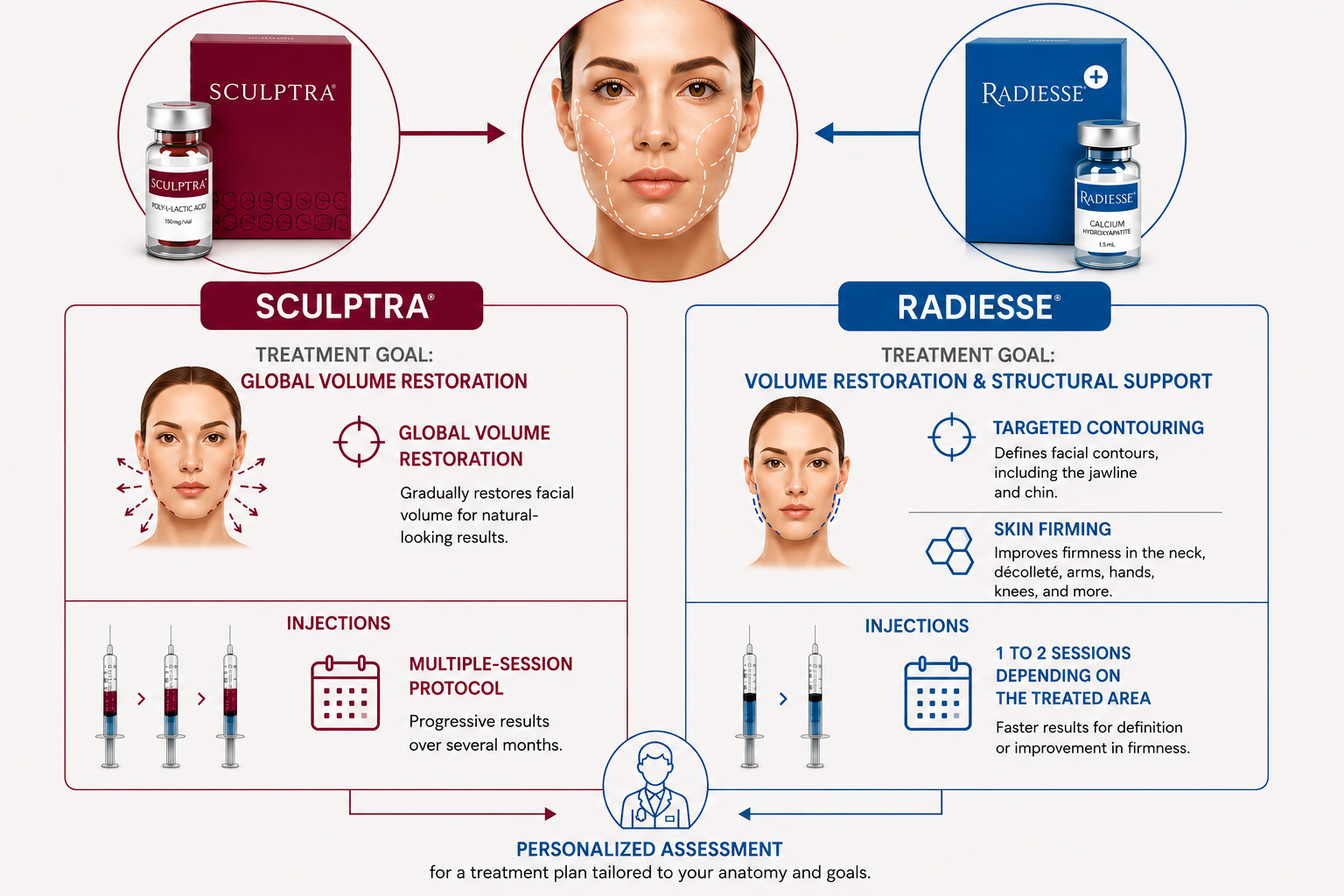
The final choice doesn’t depend solely on the product, but mainly on your anatomical profile.
The analysis of your needs varies according to your age and facial structure. Significant facial volume loss often favors Sculptra. Conversely, patients seeking jawline definition often favor Radiesse.
We guide you to better understand skin laxity and its solutions. This personalized assessment guarantees a safe and premium approach.
To guide your decision, we systematically evaluate these three fundamental pillars:
- Volume goal: Do you prefer overall reconstruction or targeted definition?
- Available budget: the initial investment varies depending on the number of vials or syringes.
- Tolerance for repeated injections: the Sculptra protocol often requires several spaced sessions.
A professional consultation remains the essential step to validate the compatibility of these biostimulators with your unique situation.
Can Sculptra and Radiesse be combined?
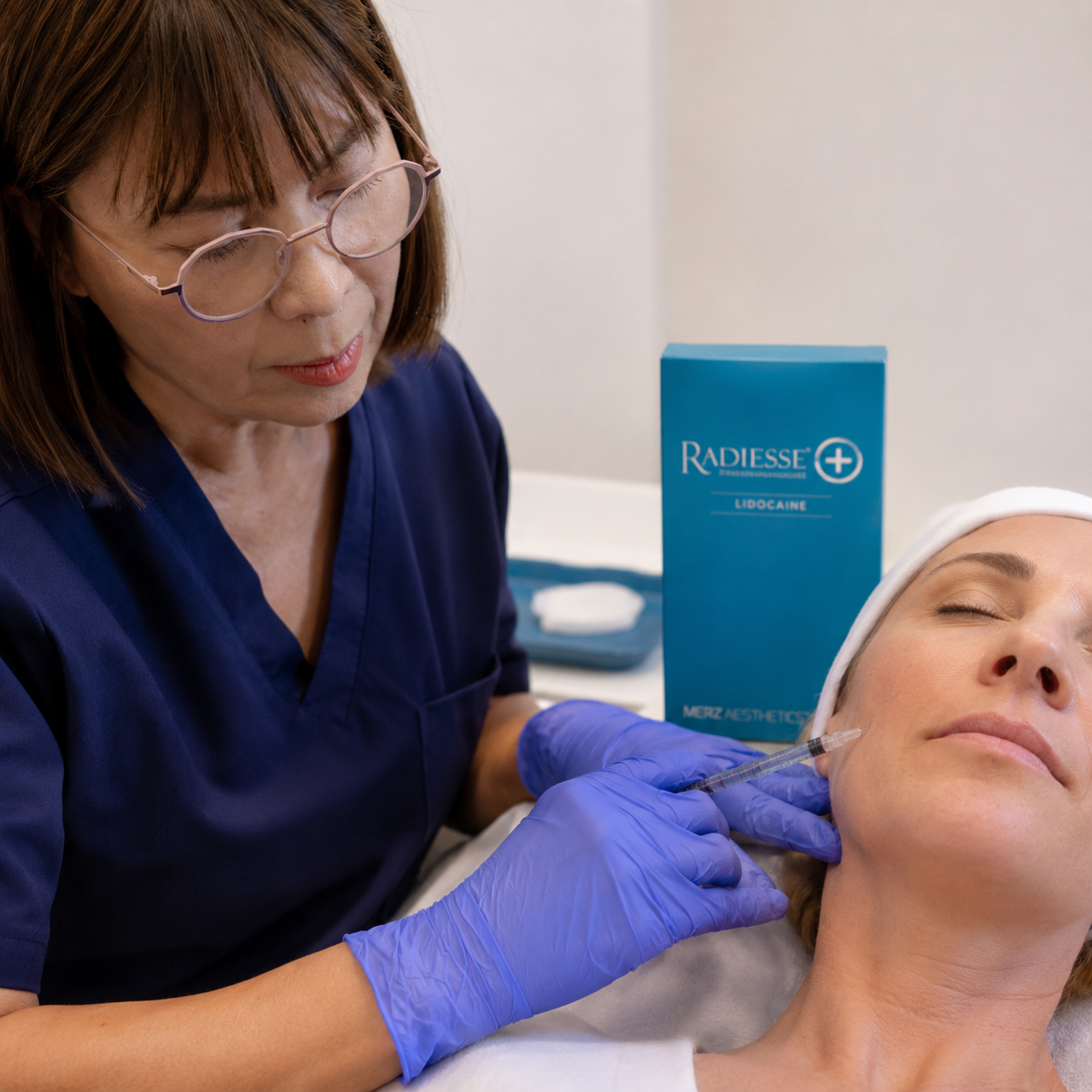
Yes, it is entirely possible to combine Sculptra and Radiesse in the same treatment plan when indicated.
The benefit of this approach is based on advanced personalization of facial rejuvenation. Certain areas of the face may benefit more from Sculptra, while others can be optimized with Radiesse. For example, it’s possible to treat the temples with one product and the cheeks or jawline with the other.
This strategy allows treatment to be adapted to the specific needs of each facial region to achieve a more harmonious, natural and balanced result.
A personalized assessment remains essential however to determine the best combination according to your anatomy, your skin quality and your aesthetic goals.
The Clinic M approach

At Clinic M, we don’t sell syringes, we develop personalized treatment plans.
The decisive moment remains your initial consultation. We examine your skin with scientific rigour to detect its real needs. This precise analysis allows us to validate your eligibility and choose the appropriate biostimulator.
Our medical expertise guarantees complete mastery of Sculptra and Radiesse. Our experienced professionals apply exclusive protocols under strict medical supervision. Here, safety is not optional, it’s our highest standard.
Ready to redefine your facial structure? We invite you to book your free consultation for a comprehensive assessment. Together, we will design your ideal treatment protocol for natural results.
FAQ
Neither of these two biostimulators is intrinsically superior to the other. They simply respond to distinct clinical objectives: Sculptra is favoured for overall and diffuse volume restoration, while Radiesse excels in contour definition and immediate structural support.
The final choice will depend exclusively on your facial anatomy and aesthetic expectations. During your consultation, we will evaluate your tissue quality to determine the most suitable molecule for your profile.
Radiesse wins on speed of action. Thanks to its carboxymethylcellulose gel, it provides a volumizing effect and an instant lift from the end of injection. It’s the ideal option for those seeking immediate transformation.
Conversely, Sculptra requires patience. Since it acts as a biological catalyst, results appear gradually after 4 to 6 weeks, the time needed for your body to produce its own new collagen.
Sculptra generally offers the greatest longevity, with results that can persist 2 years or more after a complete series of treatments. Its deep reconstruction action of the collagen network ensures remarkable stability over time.
Radiesse, while very effective, fades a bit earlier. Its corrective and biostimulating effects usually last between 12 and 18 months, depending on each patient’s individual metabolism.
Absolutely, this synergy is even frequently recommended to achieve complete three-dimensional rejuvenation. This approach, called “multilayer”, allows simultaneous treatment of overall volume loss with Sculptra and sculpting of precise areas, like the jawline, with Radiesse.
By combining these two technologies, we optimize your skin’s biological response. The face thus regains natural harmony and lasting vitality without resorting to surgery.
In aesthetic medicine, while we aim for excellence, each metabolism reacts uniquely to biostimulation. Collagen production depends on individual factors like age, lifestyle and the response capacity of fibroblasts.
However, clinical data is extremely reassuring: a vast majority of patients, notice a significant improvement in firmness and quality of their skin after the recommended protocol.

Dre My Linh Tran
A family physician trained at the University of Sherbrooke, Dr. My Linh Tran practices aesthetic medicine and medical dermatology at Clinique M, with an approach focused on the natural harmony of the face.