



Your Medical Aesthetic Clinic in Montreal

Your Medical Aesthetic Clinic in Montreal

Hair Loss (Alopecia): Understanding Hair Loss and Available Treatments

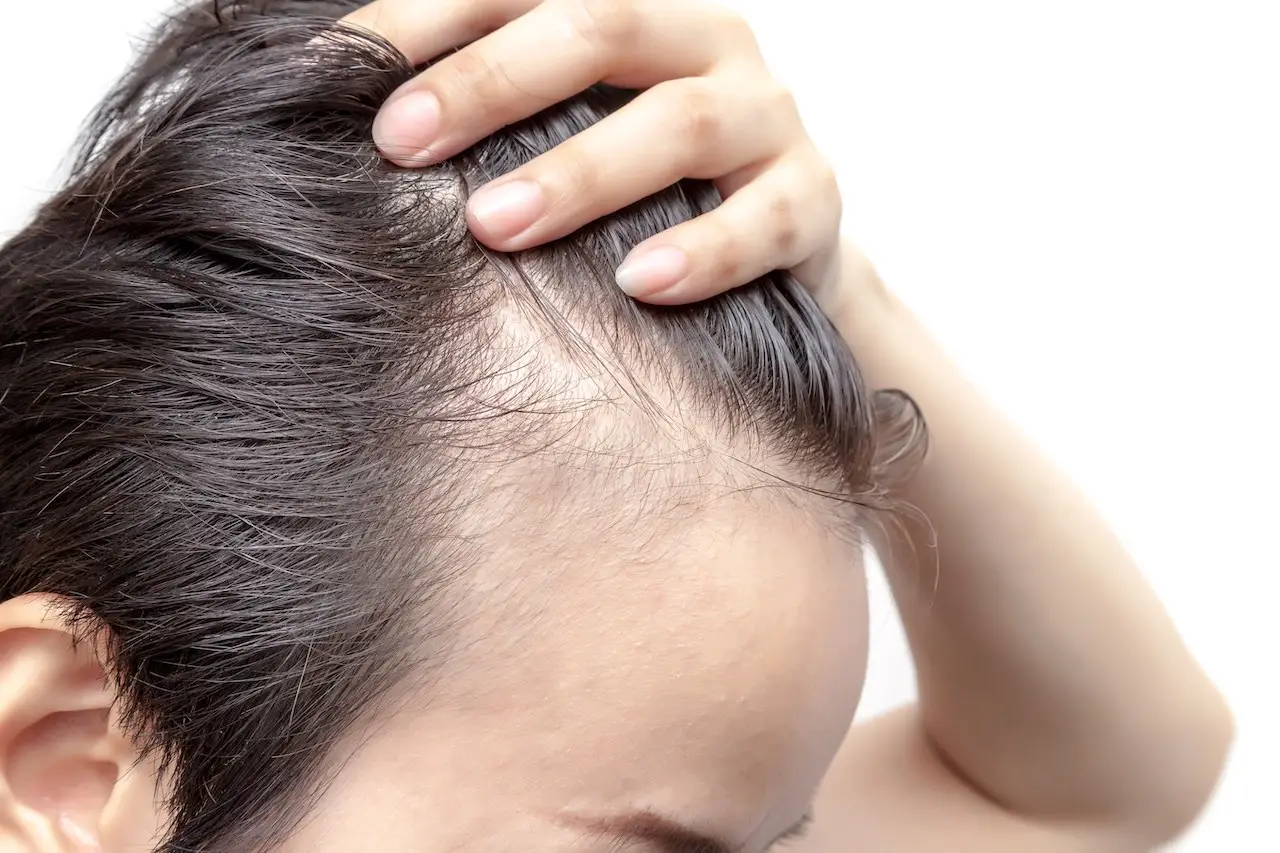
Alopecia refers to excessive or abnormal hair loss. It may develop gradually or suddenly, affect a specific area of the scalp, or cause more diffuse thinning.

It is normal to lose between 50 and 100 hairs per day as part of the natural hair growth cycle. When hair falls out faster than it grows back, thinning, reduced density, or bald patches may become noticeable.

Alopecia can affect both men and women. It may be caused by genetic, hormonal, autoimmune, nutritional, medical, or stress-related factors.

Androgenetic alopecia affects approximately 50% of men, with nearly four out of five developing noticeable hair loss before the age of 70. Nearly 40% of women over the age of 50 show visible signs of hair thinning. Alopecia areata, also known as patchy hair loss, affects approximately 2% of the population during their lifetime.

The Clinique M Approach

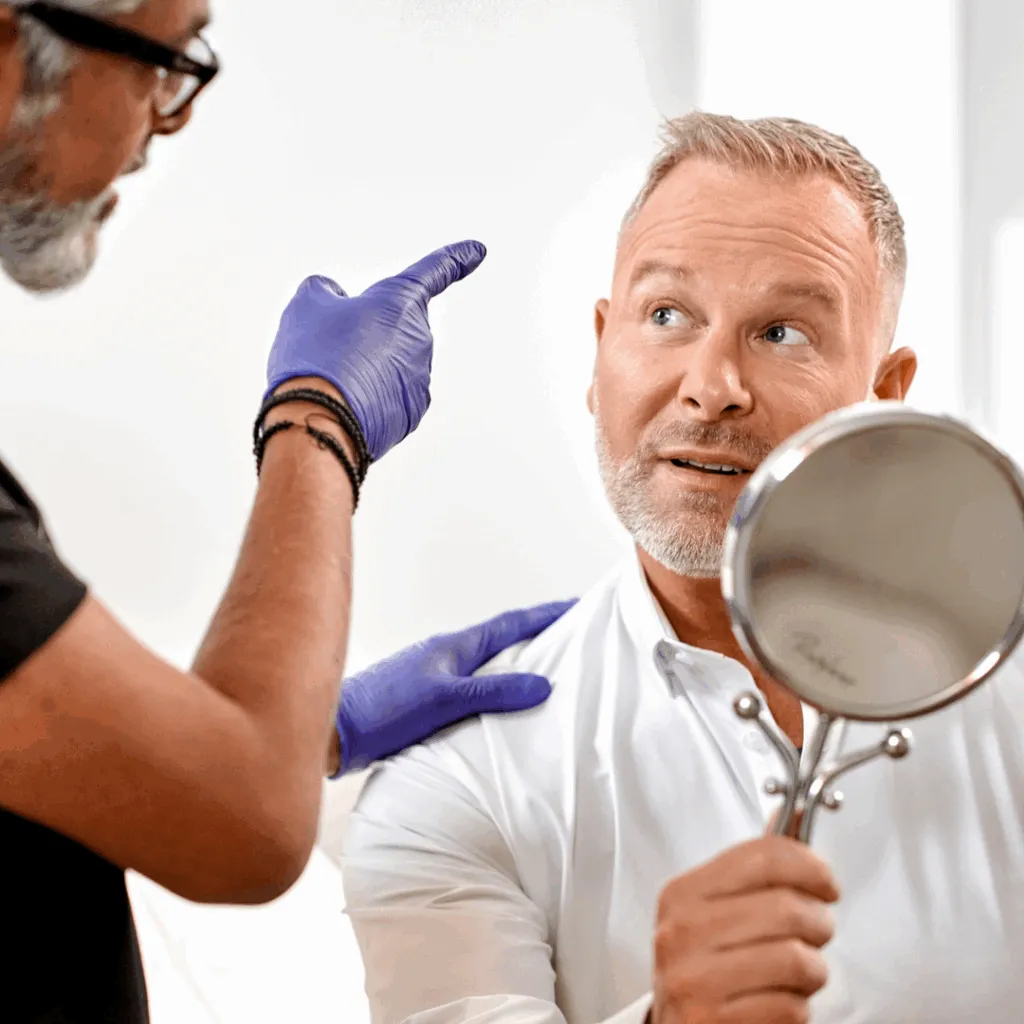
At Clinique M, every treatment begins with a personalized medical evaluation of your hair loss and scalp health. Our goal is to identify the underlying cause of alopecia before recommending any treatment.

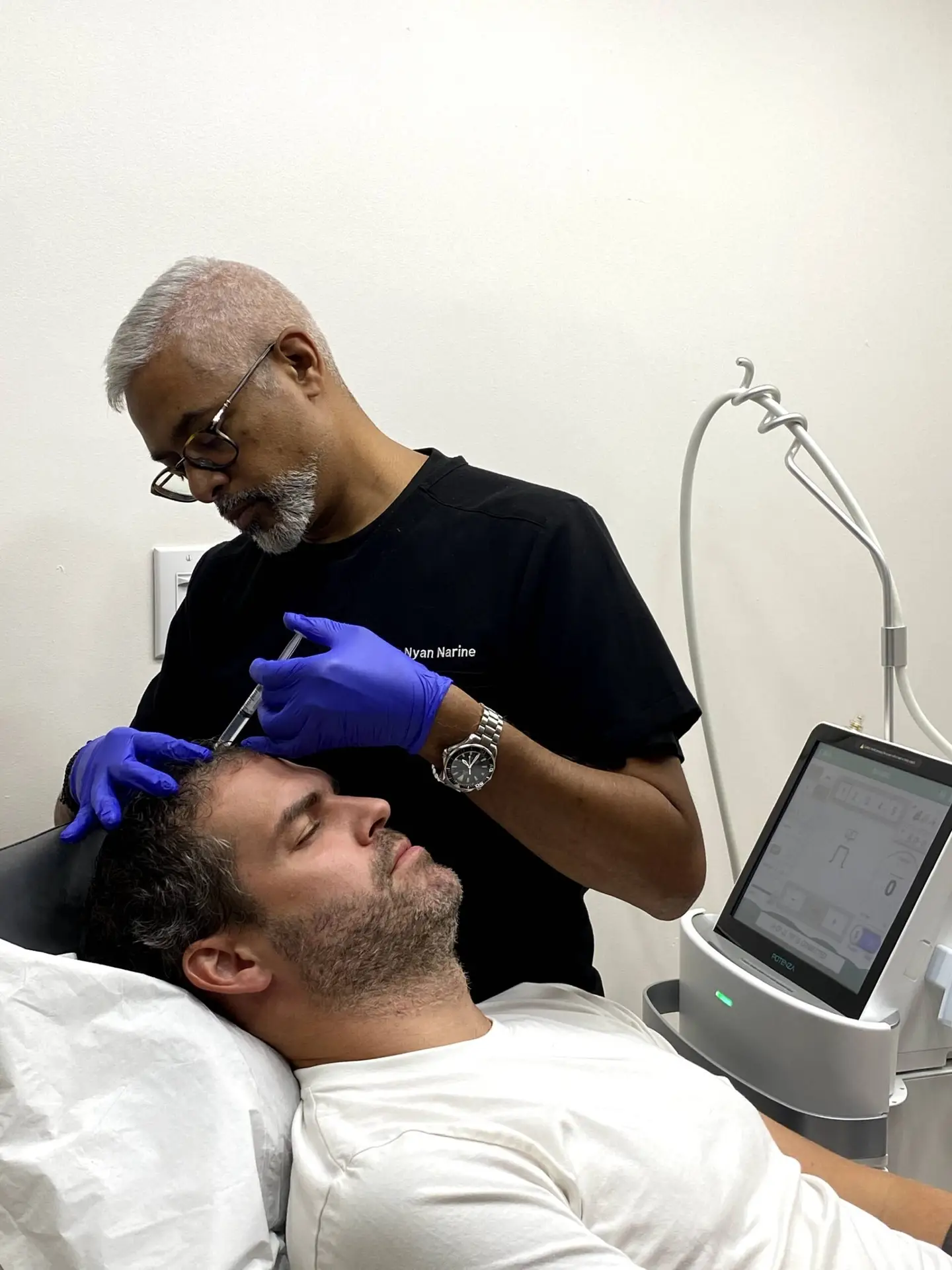
Depending on the diagnosis and the patient’s profile, treatment options may include medical therapies, PRP, exosomes, or our bio-regenerative hair restoration protocol.

Every treatment plan is personalized according to the type of hair loss, its progression, the patient’s medical history, and their goals.

Alopécie diagnostic et traitements capillaires à la Clinique M

Recommended Treatment

Bio-Regenerative
Hair Protocol

Hair loss can change your self-image and make you look tired, even when everything’s going well. At Clinique M, we treat it as a clinic issue: a rigorous diagnosis and a personalized strategy are essential to recommending the right plan.


Complementary Treatments

What is alopecia?

Alopecia is a condition characterized by excessive hair loss. It may affect the scalp alone or other areas of the body where hair normally grows.

Hair loss may appear in different forms. Some people experience gradual thinning, while others develop sudden shedding, diffuse hair loss, or localized bald patches.

The causes vary depending on the type of alopecia and may include genetics, hormonal changes, autoimmune diseases, nutritional deficiencies, medications, stress, or repeated trauma to the scalp.

An accurate diagnosis is essential because not all forms of hair loss require the same treatment.

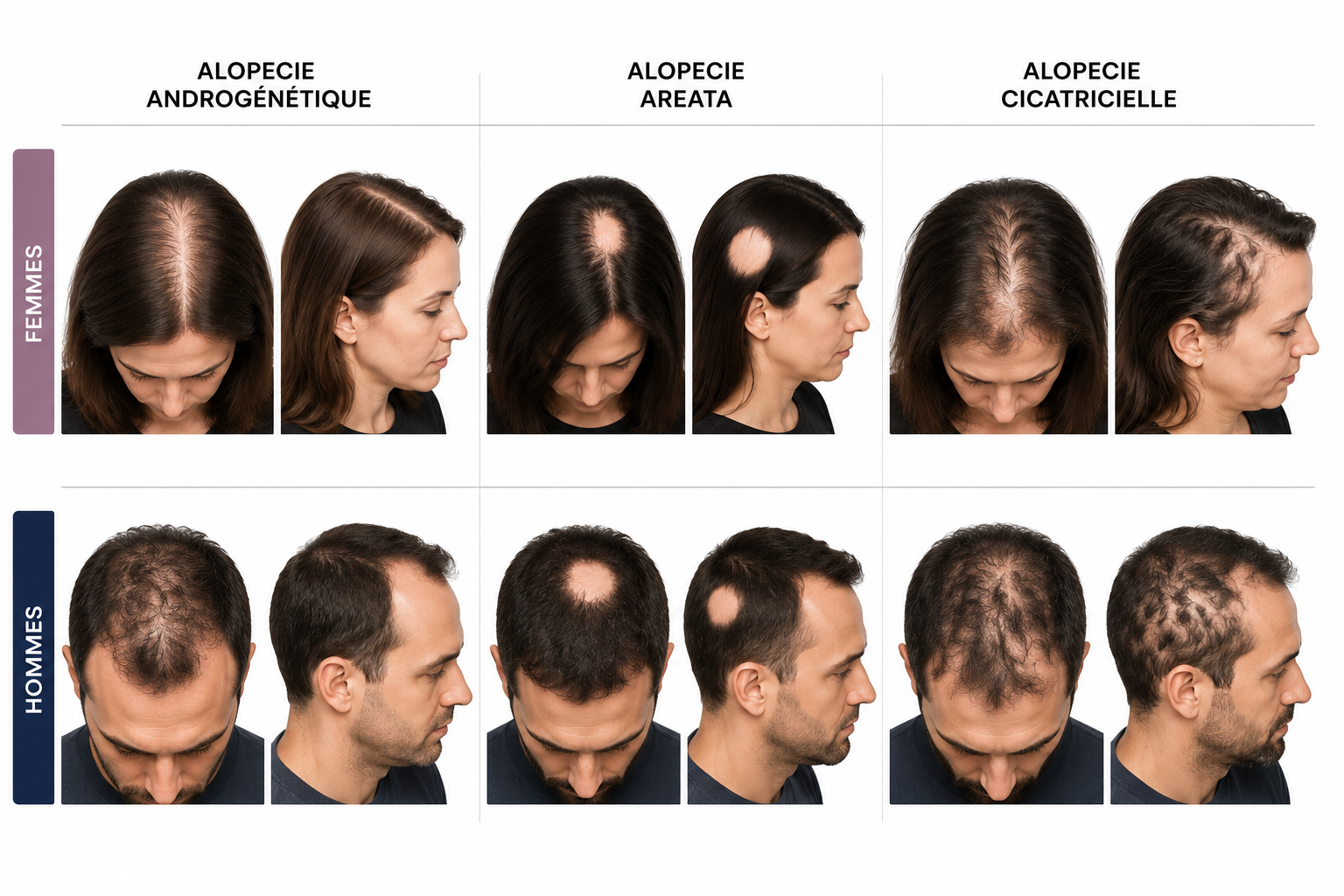
Les différents types d’alopécie : androgénétique, areata et cicatricielle

Androgenetic alopecia

Androgenetic alopecia, also known as common baldness, is the most frequent form of hair loss. It’s linked to a genetic predisposition and to the sensitivity of hair follicles to androgen hormones, particularly dihydrotestosterone (DHT).

Under the effect of DHT, follicles gradually shrink. The hair they produce becomes finer, shorter, and less pigmented, until some follicles stop producing visible hair.

Alopecia in Men and Women: What's the Difference?

Alopecia affects both men and women, though it doesn’t always show up the same way.

In men, hair loss often starts with a receding hairline, thinning at the temples, or thinning at the crown.

In women, hair loss is usually more diffuse. It often shows up as reduced volume or a widening part, while the hairline is typically preserved.

Hormonal, genetic, and medical factors should all be considered to identify the treatment best suited to each person.

Androgenetic Alopecia in Men

In men, androgenetic alopecia can start as early as the teenage years or early adulthood. It usually appears as a gradually receding hairline, thinning at the temples, and thinning at the crown.

Over time, the frontal areas and the crown can merge, leaving a ring of hair along the sides and back of the head.

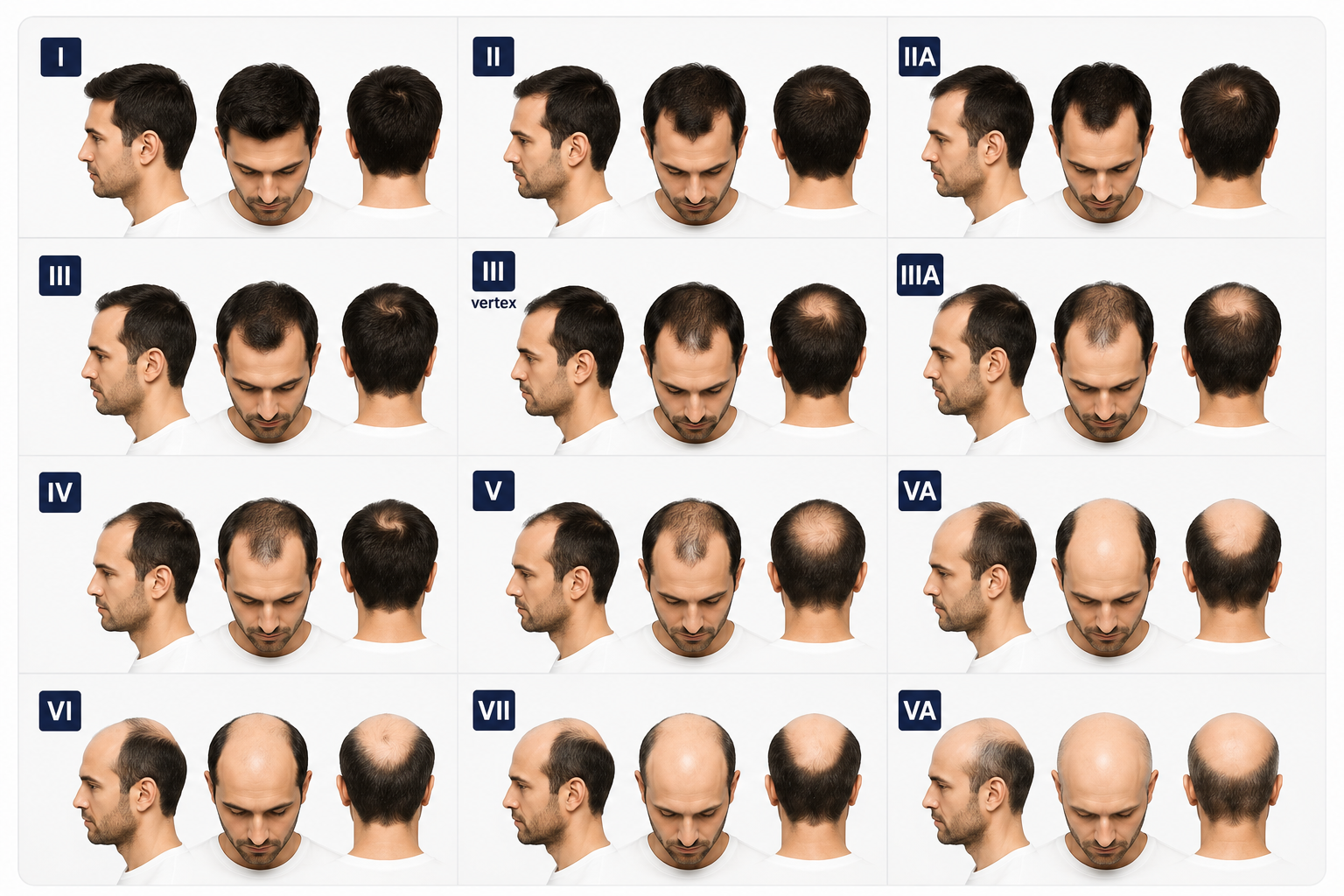
Its progression is typically tracked using the Hamilton-Norwood scale, which includes seven main stages.

Échelle de Hamilton-Norwood — stades de la calvitie masculine

The Hamilton-Norwood Scale

The Hamilton-Norwood scale is used to track the progression of male androgenetic alopecia, from mild frontal recession to more extensive hair loss on top of the head.

Androgenetic Alopecia in Women

In women, androgenetic alopecia usually causes diffuse thinning on top of the head. The center part can widen and the scalp become more visible, while the hairline is generally preserved.

This type of hair loss can be influenced by hormonal changes, including menopause, the postpartum period, or conditions such as polycystic ovary syndrome.

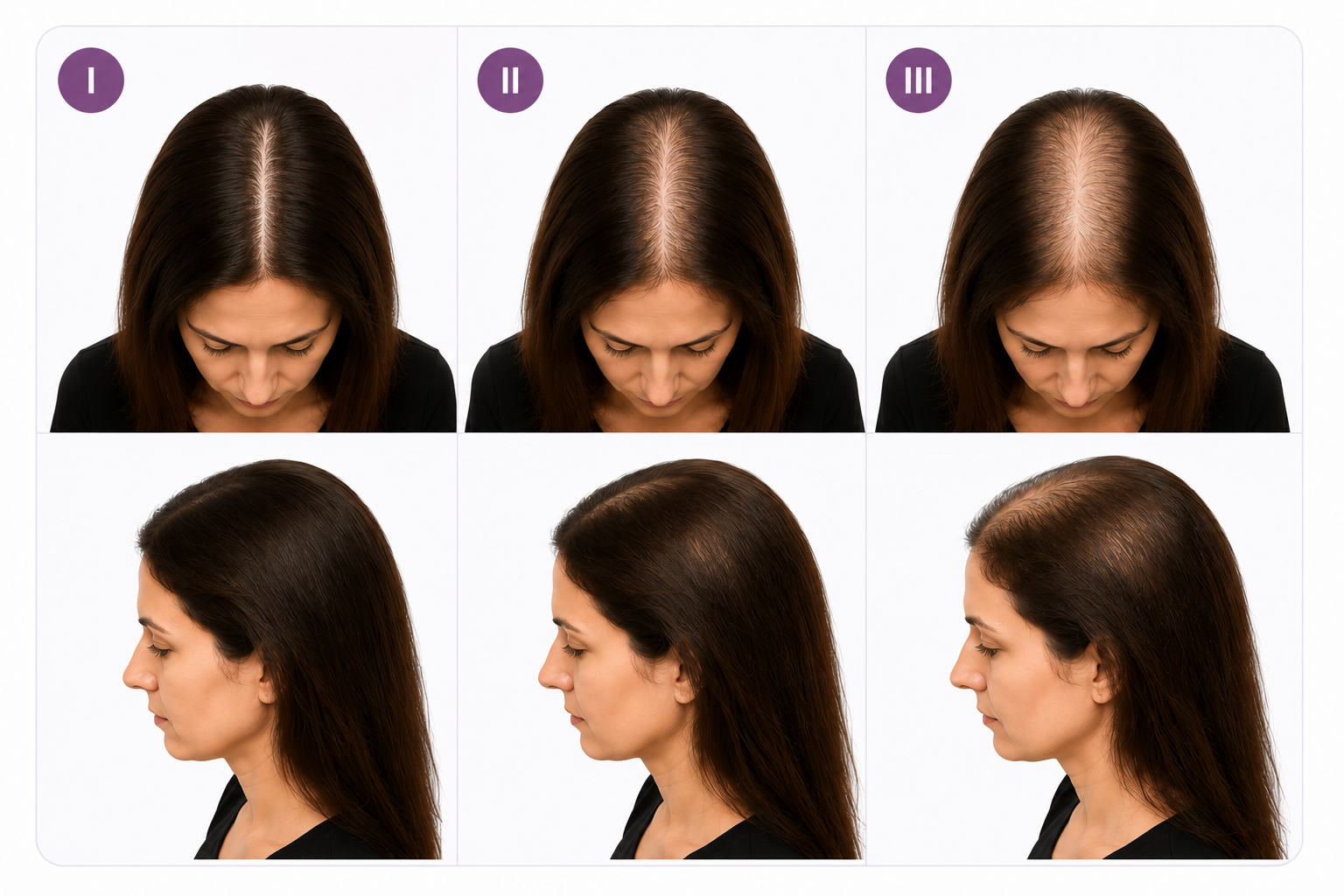
Its progression can be tracked using the Ludwig scale, which classifies female hair density loss into three main stages.

Échelle de Ludwig — stades de l’alopécie féminine

Causes and Risk Factors of Androgenetic Alopecia

Androgenetic alopecia is mainly linked to a genetic predisposition and increased sensitivity of hair follicles to DHT.

DHT is a hormone derived from testosterone. In people with this predisposition, it gradually causes hair follicles to shrink. Hair becomes finer, grows for a shorter period, and may eventually stop appearing altogether.

Age, hormonal changes, and family history can also affect how quickly and how much the condition progresses.

Genetic factors

Androgenetic alopecia has a strong hereditary component. The predisposition can come from the mother’s side, the father’s side, or both.

Having a parent with baldness or thinning hair increases the risk of developing this condition, though it doesn’t predict exactly when it will appear or how it will progress.

Beyond the Physical: The Emotional Impact of Hair Loss

Hair loss can affect self-esteem, confidence, and how people see their own appearance. For some, it can also bring on anxiety, emotional distress, or social withdrawal.

These effects can touch men and women alike, even though hair loss in women is sometimes less recognized or openly discussed.

Seeing a specialist early helps identify the cause of hair loss and address it before it becomes more advanced.

Alopecia areata

Alopecia areata, also known as spot baldness, is an autoimmune condition that causes localized hair loss. The immune system mistakenly attacks hair follicles, usually leading to round or oval bald patches.

It can affect the scalp, beard, eyebrows, or other areas of the body. Its course is unpredictable, some patches may regrow on their own, while new ones may appear.

Causes

Alopecia areata is an autoimmune condition. The immune system temporarily attacks hair follicles, although the follicles aren’t necessarily destroyed.

The exact causes aren’t fully understood. A genetic predisposition, certain autoimmune conditions, and environmental or emotional factors may all play a role.

Symptoms

The main symptom is the sudden appearance of one or more patches of hair loss, usually round or oval.

The skin is often smooth, with no scarring. Some people may also notice mild tingling, itching, or sensitivity before the hair falls out.

In some cases, the nails may show small pits or become more fragile.

Diagnosis

Diagnosis is usually based on a clinical exam of the scalp and the appearance of the patches.

Trichoscopy, blood tests, or, less commonly, a scalp biopsy may be recommended to confirm the diagnosis or rule out other causes of hair loss.

Treatment

There’s no single treatment that works for every case of alopecia areata. Management depends on the extent of the hair loss, how long it’s been present, the patient’s age, and any related medical conditions.

Options may include corticosteroids, certain immune-modulating treatments, or other treatments prescribed by a dermatologist.

Bio-regenerative treatments aren’t necessarily suitable for every form of alopecia areata. A medical evaluation is essential before recommending an approach.

Prognosis

The course of alopecia areata varies widely from person to person.

In some cases, hair regrows on its own after a few months. In others, hair loss can return, spread, or become more extensive.

Medical follow-up helps assess the situation and discuss the options available as the condition evolves.

Alopecia Totalis

Alopecia totalis is an extensive form of alopecia areata that causes complete loss of scalp hair.

It results from an autoimmune reaction and requires specialized medical evaluation to confirm the diagnosis and determine possible treatment options.

Alopecia Universalis

Alopecia universalis is the most extensive form of alopecia areata. It causes the loss of all hair on the body, including eyebrows and eyelashes.

Its course varies from patient to patient, and specialized care is recommended.

exosomes capillaires

Scarring alopecia

Scarring alopecia refers to a group of rare conditions in which inflammation destroys hair follicles and gradually replaces them with scar tissue.

Unlike some non-scarring forms, hair loss can become permanent once the follicles are destroyed. Early intervention matters, as it helps limit the condition’s progression.

Causes

Scarring alopecia can result from an inflammatory or autoimmune condition that attacks hair follicles.

It can also develop after certain infections, burns, injuries, trauma, or surgical procedures.

Conditions such as cutaneous lupus or lichen planopilaris can be linked to certain forms of scarring alopecia.

Symptoms

Symptoms can include gradual or localized hair loss, redness, inflammation, itching, a burning sensation, or scalp pain.

The skin may look smoother or shinier in areas where follicles have been destroyed.

Diagnosis

Diagnosis is based on a clinical exam of the scalp, trichoscopy, and an assessment of symptoms.

A scalp biopsy is often needed to determine the exact type of scarring alopecia and guide treatment.

Treatment

Treatment mainly aims to reduce inflammation and slow or stop the condition’s progression.

Depending on the diagnosis, a doctor may recommend corticosteroids, antibiotics, immune-modulating medications, or other suitable treatments.

Hair generally doesn’t grow back in areas where follicles have been permanently destroyed, so the main goal is to protect the follicles that are still active.

Prognosis

The prognosis depends on the cause of the scarring alopecia, how widespread it is, and how quickly it’s addressed.

Early intervention can help stabilize the condition and limit further loss. Once follicles are destroyed, hair loss is usually permanent.
Traction Alopecia

Traction alopecia is caused by repeated or prolonged tension on the hair.

It can be linked to tightly pulled braids, ponytails, buns, extensions, or other hairstyles that keep constant tension on the hair.

Early on, this hair loss can be reversible once the tension is removed. If it continues, it can lead to inflammation and permanent damage to the follicles.

Telogen Effluvium

Telogen effluvium is a diffuse, usually temporary type of hair loss. It happens when a large number of hairs prematurely enter the resting phase of the hair growth cycle.

It can appear a few weeks or months after childbirth, surgery, illness, significant weight loss, emotional stress, or a nutritional deficiency.

Regrowth is usually possible once the trigger is identified and addressed.

injections capillaires

Symptoms of Alopecia

Symptoms vary depending on the cause and type of alopecia.

Patchy hair loss — Round or oval bald areas can appear on the scalp, beard, or other parts of the body.

Diffuse thinning — Hair can become gradually less dense across the whole scalp, without any fully bald area.

Receding hairline — In some men, the hairline gradually moves back at the temples and forehead.

Widening part — In women, the center part can widen and the scalp become more visible.

Finer hair — Hair can become shorter, finer, and less pigmented as the follicles shrink.

Sudden or clumped hair loss — A significant, rapid loss of hair can occur after an illness, childbirth, surgery, or intense stress.

Scalp symptoms — Some forms of alopecia can come with redness, itching, pain, crusting, or a burning sensation.

Complete hair loss — In more extensive forms, alopecia can lead to complete loss of scalp hair or all body hair.

How Is Alopecia Diagnosed?

Diagnosing alopecia involves several steps. It helps identify the type of hair loss, its possible causes, and the treatments that may be worth considering.

Initial consultation During the consultation, our specialist reviews how the hair loss has progressed, your medical and family history, current medications, lifestyle habits, and any related symptoms.

Scalp examination A scalp exam assesses hair density, the pattern of hair loss, the condition of the follicles, and whether there’s redness, patches, scarring, or inflammation.

Trichoscopy Trichoscopy is an exam done with a dermoscope. It allows for a closer look at the hair and follicles to identify signs characteristic of specific types of alopecia.

Blood tests A doctor may recommend blood tests to check thyroid function, iron levels, ferritin, certain vitamins, or hormones.

Scalp biopsy In some cases, a biopsy may be needed, particularly when scarring alopecia or an inflammatory condition is suspected.

At Clinique M, every patient receives a personalized assessment before any hair treatment is recommended.

Alopecia Treatments

Treatment for alopecia depends on its cause, its stage, the condition of the hair follicles, and the patient’s medical profile.

Some forms can be slowed or stabilized, while others call for specific medical care. An evaluation is essential before choosing a treatment.

Medication-Based Treatments

Certain medical treatments may be recommended to slow hair loss or support regrowth in some cases of androgenetic alopecia.

They should be chosen based on the diagnosis, medical history, contraindications, and the patient’s goals.

Minoxidil Minoxidil is a topical treatment applied directly to the scalp. It can help slow hair loss and stimulate growth in some hair.

Regular use is required, and initial results can take several months to appear. Stopping the treatment can lead to a gradual return of hair loss.

Finasteride and dutasteride Finasteride and dutasteride are prescription medications that reduce the conversion of testosterone into DHT.

They may be used in some men with androgenetic alopecia. Prescribing them requires a medical consultation to weigh the benefits, risks, possible side effects, and contraindications.

Depending on the diagnosis, medical treatments can sometimes be combined with PRP, exosomes, or a bio-regenerative hair protocol. A doctor will determine the approach best suited to each patient.

PRP Treatment for Hair Loss

PRP uses a concentration of platelets drawn from the patient’s own blood.

Platelets contain growth factors that can help support the activity of still-active follicles, improve hair quality, and create a more favourable environment for hair growth.

PRP may be considered for certain types of hair loss, including androgenetic alopecia, based on a medical evaluation.

Hair Exosome Treatment

Exosomes are used in some bio-regenerative hair protocols to support cell communication and the environment around hair follicles.

They can contain various biological factors involved in tissue repair and regeneration.

Their use should only be recommended after a full evaluation of hair loss and scalp condition.

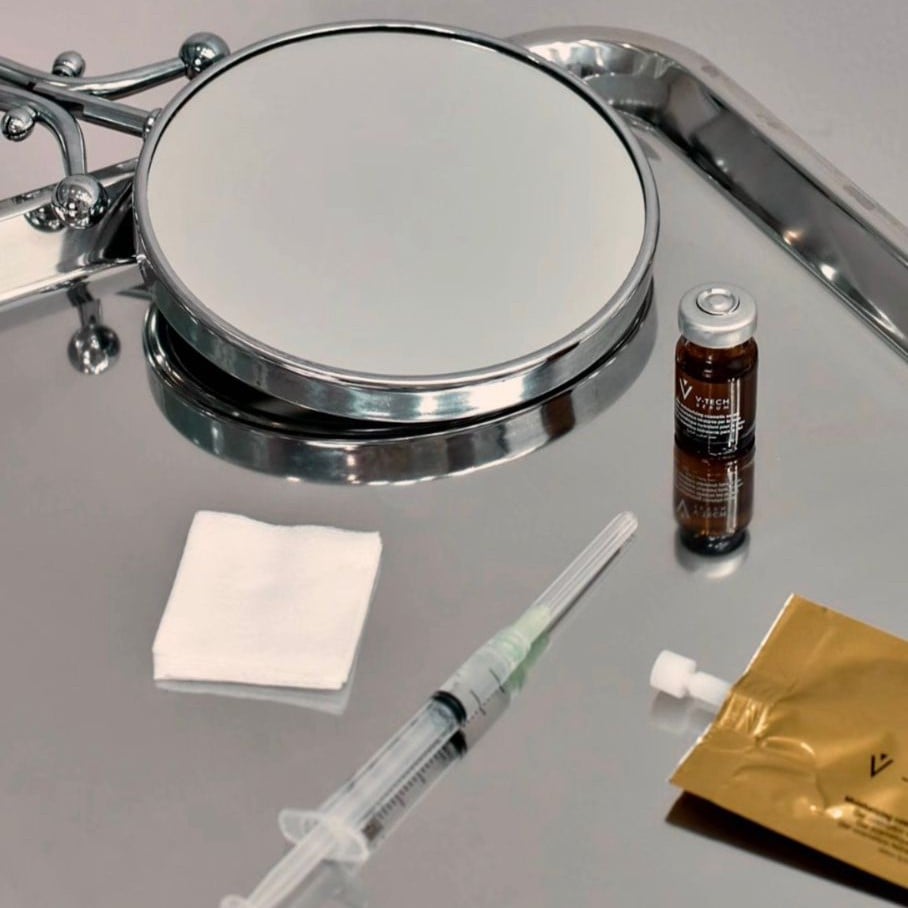
Bio-Regenerative Hair Protocol

Clinique M’s bio-regenerative hair protocol combines different approaches based on the diagnosis, the condition of the follicles, and the patient’s goals.

It can include PRP, exosomes, or other complementary methods as part of a personalized plan.

The number of sessions, treatment frequency, and possible results vary from case to case.

Hair Transplant

A hair transplant involves taking follicles from a donor area, usually at the back or sides of the scalp, and implanting them into thinning areas.

It may be an option for some patients with stabilized androgenetic alopecia and a sufficient donor area.

It isn’t suited to every form of alopecia, particularly when hair loss is active, diffuse, or linked to an uncontrolled inflammatory condition.

LED Light Therapy

Photobiomodulation using LED or low-level laser light can be used as a complementary approach in some hair protocols.

It aims to support cell activity and the environment around hair follicles.

Its effectiveness varies depending on the type of hair loss, and it doesn’t replace a proper diagnosis or medical treatment when one is needed.

When to See Someone About Hair Loss

It’s a good idea to see a professional when hair loss becomes more noticeable than usual, appears suddenly, or comes with other symptoms.

An evaluation is especially recommended in the following situations:

  • Rapid or sudden hair loss.
  • Hair falling out in clumps.
  • Bald patches appearing.
  • A gradually receding hairline.
  • A noticeably widening part.
  • Hair loss after childbirth, an illness, surgery, or intense stress.
  • Redness, itching, pain, or inflammation of the scalp.
  • Scarring or smooth, shiny patches.
  • Hair loss affecting your confidence, quality of life, or emotional well-being.

A consultation helps identify the possible cause of your hair loss and discuss the options suited to your situation.

FAQ

Some people notice a temporary increase in shedding in the fall or spring. This is usually linked to the natural hair cycle and doesn’t necessarily mean permanent alopecia is developing.

Moderate sun exposure doesn’t typically cause alopecia directly. However, excessive exposure can dry out hair, weaken the hair fibers, and irritate the scalp.

Hormones influence the hair growth cycle. Changes related to pregnancy, postpartum, menopause, thyroid function, or polycystic ovary syndrome can contribute to hair loss or thinning.

Significant physical or emotional stress can trigger telogen effluvium. The shedding often appears several weeks or months after the triggering event.

Trichotillomania is a condition marked by a repeated urge to pull out one’s own hair. It can cause irregular patches of hair loss and requires appropriate care.

Yes. A deficiency in iron, protein, or certain nutrients can contribute to diffuse shedding. Blood tests may be recommended if a deficiency is suspected.

It’s best to avoid overly tight hairstyles, excessive heat, repeated bleaching, and harsh handling. A balanced diet and managing any underlying health issues are also important.

Hairstyles that pull on the hair, extensions, repeated chemical treatments, smoking, and overly restrictive eating habits can weaken hair or worsen certain types of shedding.

Yes. Some medications can cause temporary shedding. You should never stop a treatment without consulting the professional who prescribed it.

Yes. After childbirth, hormonal changes can trigger telogen effluvium. The shedding is usually temporary, and density tends to improve gradually over the following months.

Certain autoimmune diseases, infections, inflammatory conditions, scarring, toxic exposures, or genetic conditions can cause hair loss. A medical consultation helps guide the diagnosis.

Your transformation starts here

Do not hesitate to contact us for a personalized consultation and to begin your transformation.

* Results may vary from person to person. We present, to the best of our knowledge, an average of the results obtained. No guarantee is offered. Our goal is to properly evaluate your profile so that you can make an informed decision.

Get a free consultation*

Complete this form to arrange a personalized meeting. We will be happy to respond to you as soon as possible.
Consultation without obligation

Thousands of satisfied clients have trusted our medical-aesthetic clinic for over 15 years.

Thousands of satisfied customers
uc_stacked_images_elementor_a02d4f4_item1 uc_stacked_images_elementor_a02d4f4_item2 uc_stacked_images_elementor_a02d4f4_item3 uc_stacked_images_elementor_a02d4f4_item4

A trusted medical-aesthetic clinic for over 15 years.

⭐️⭐️⭐️⭐️⭐️ — 4.9/5 on Google

Our commitment

Response within 24 hours

Personalized treatment

Contact Us

Email

info@mrockland.com

Phone

(438) 601-4718

Our Address

233 Av. Dunbar, Mont-Royal, QC H3P 2H4, Canada

Get a free consultation*

Complete this form to arrange a personalized meeting. We will be happy to respond to you as soon as possible.

* Free consultation for all our services except injectable and surgical components.