

Can a colour tattoo be removed? Yes, even stubborn inks
Thanks to advances in laser technology, coloured tattoo removal is now possible, including for challenging shades such as blue and green. Modern laser systems use specific wavelengths to target and break down tattoo pigments while minimizing damage to the surrounding skin.
However, removing a coloured tattoo can be more complex than removing black ink. Different pigments absorb laser energy differently, which means each colour may require a tailored approach.
In this article, we explain how laser tattoo removal works on coloured ink, which shades are the most challenging to treat, how many sessions you may need, and what to expect throughout the process.
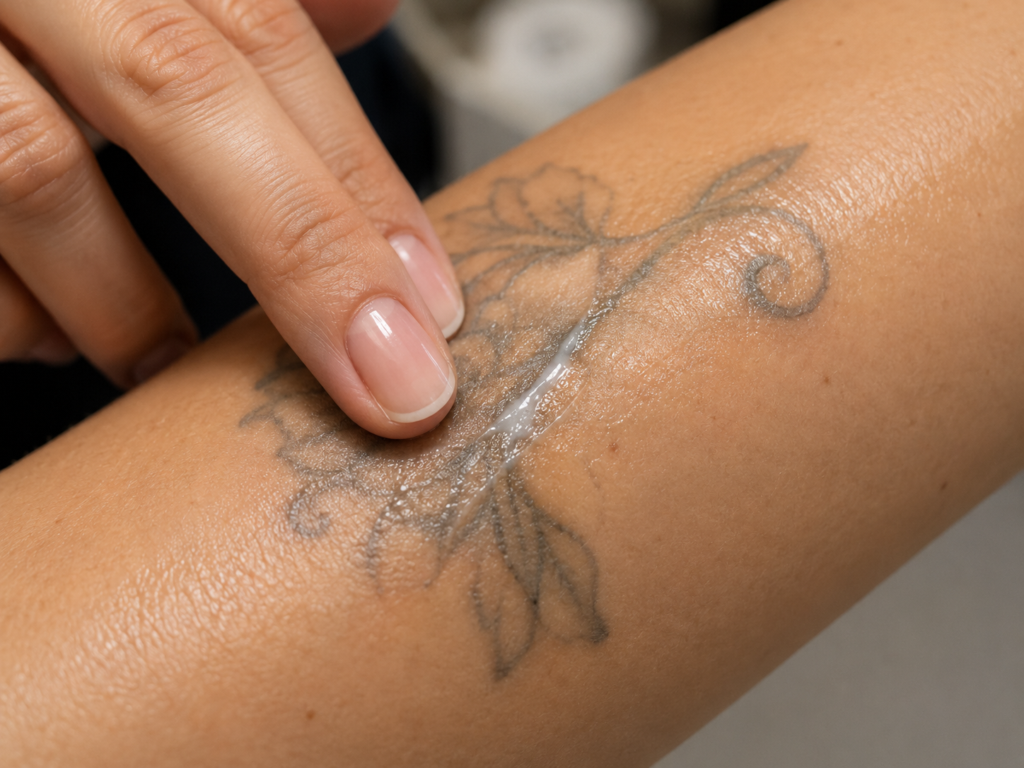
How laser tattoo removal works on coloured ink
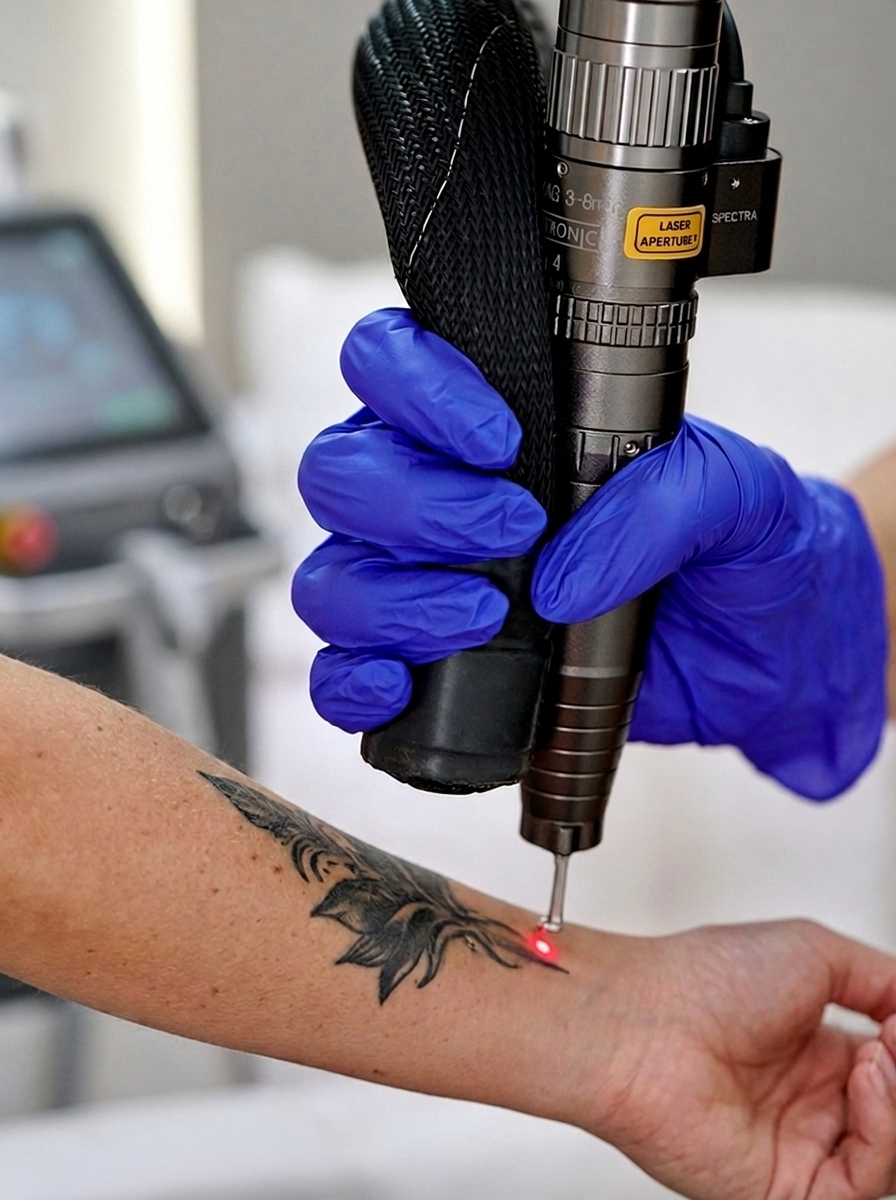
Laser tattoo removal uses concentrated pulses of light energy to target and break down tattoo pigments beneath the skin.
At Clinique M, we use the Hollywood Spectra laser, a medical-grade Q-switched laser system designed to deliver high-energy pulses in extremely short intervals.
When the laser energy reaches the tattoo pigment, it breaks the ink into smaller particles. Over the following weeks, the body’s immune system gradually processes and clears some of these fragmented particles.
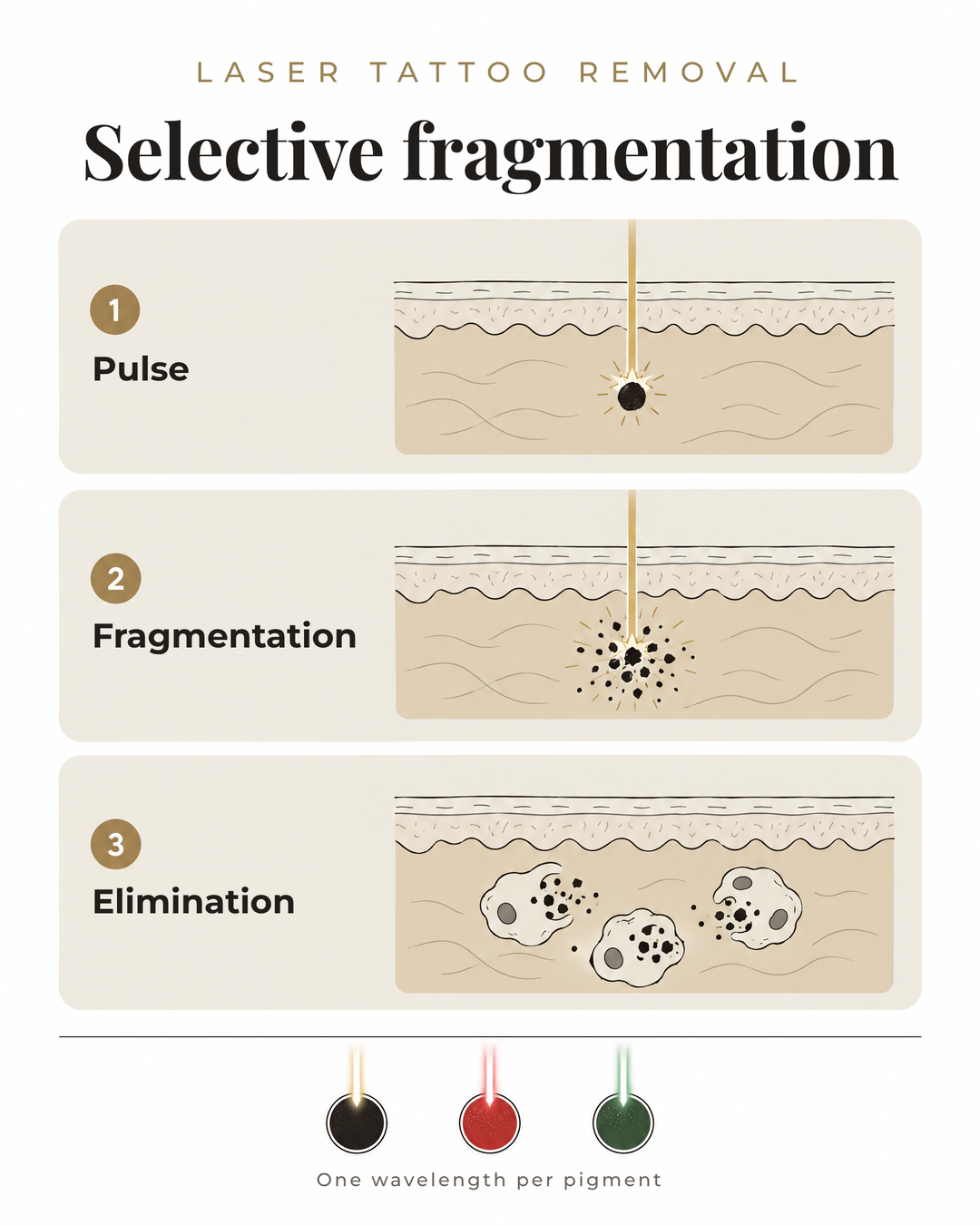
Why does tattoo colour matter?
Not all tattoo inks absorb laser energy in the same way.
Black ink absorbs a broad range of wavelengths, making it generally easier to target. Coloured pigments, on the other hand, respond to more specific wavelengths.
For example, red ink often responds well to a wavelength of 532 nm, while certain green and blue pigments require different wavelengths that may not be available on every laser system.
This is why coloured tattoo removal requires careful treatment planning and an understanding of how different pigments interact with laser energy.
The objective is to break down as much ink as possible while minimizing unnecessary damage to the surrounding skin.
With the appropriate technology and treatment settings, many coloured tattoos can be significantly faded, although complete removal cannot always be guaranteed.
Which colours are hardest for coloured tattoo removal?
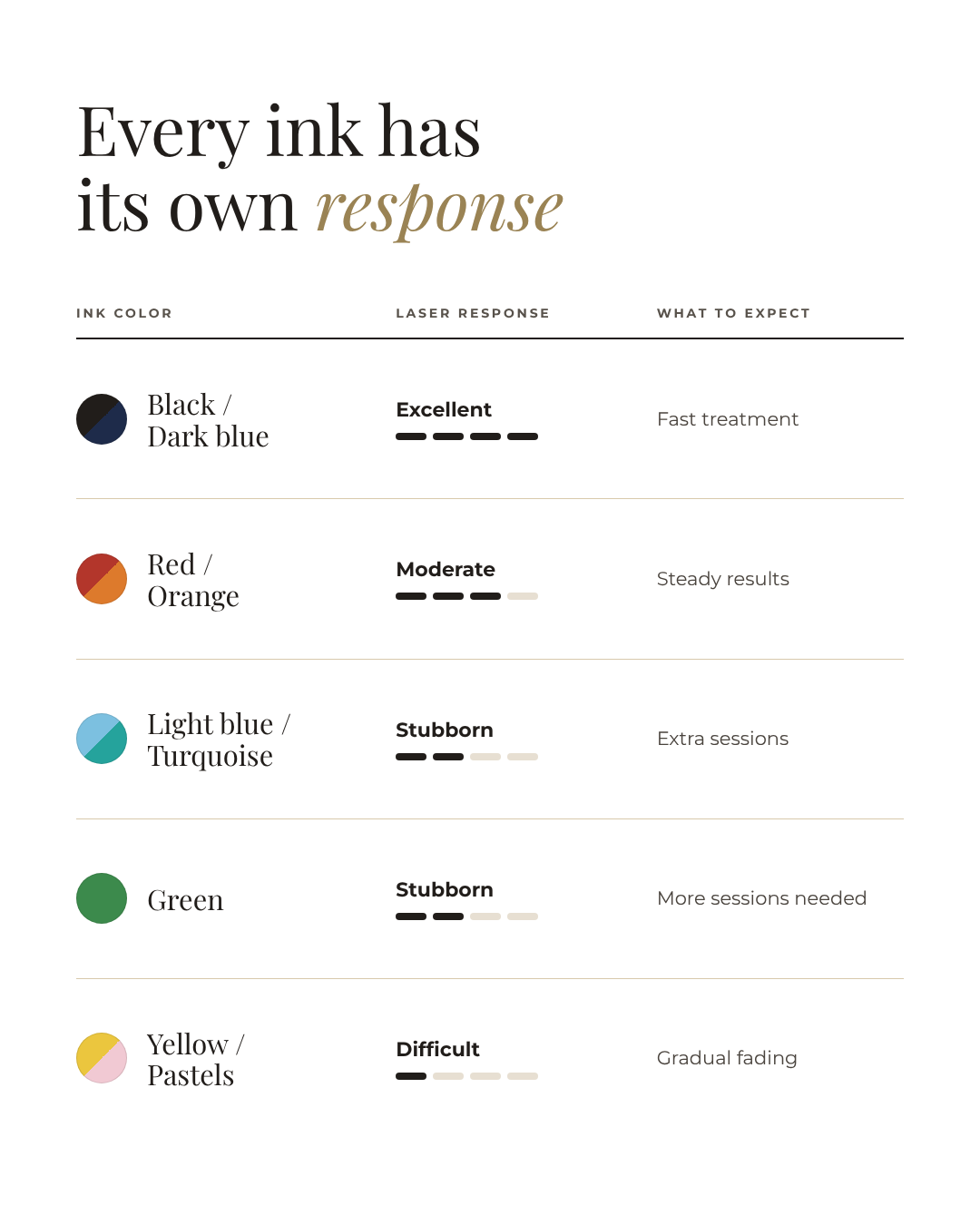
What influences how easily a tattoo fades?
One of the biggest misconceptions about coloured tattoo removal is that all pigments respond equally to laser treatment.
In reality, some colours fade relatively easily, while others can be particularly resistant.
These are general guidelines. Results vary depending on the specific ink formulation, tattoo characteristics and available laser wavelengths.
Beyond colour, several factors can affect the results of laser tattoo removal.
Tattoo age: Older tattoos may be easier to fade because some of the pigment has already broken down naturally over time.
Ink density: Professional tattoos often contain a higher concentration of pigment, particularly in heavily shaded or saturated areas.
Pigment depth: Ink deposited deeper within the skin may require additional treatments.
Skin phototype: Darker skin tones require particular care when selecting laser settings to minimize the risk of pigmentation changes.
Individual healing response: The body’s ability to process and clear fragmented ink particles varies from person to person.
Because no two tattoos are identical, a professional assessment is essential before establishing a treatment plan.
Hollywood Spectra technology and Manon's expertise
Beyond the ink colour itself, the quality of the laser technology and the expertise of the professional performing the treatment make a significant difference.

Hollywood Spectra technology and professional expertise
The Hollywood Spectra laser is a recognized medical-grade technology used for tattoo removal. Its precision and high peak power allow it to target tattoo pigments at different depths. Certain blue and green pigments may require specific wavelengths for effective treatment.
Manon carefully oversees each treatment protocol, adjusting the settings according to your skin’s immediate response. Rather than following an automated process, every session requires technical precision and professional judgment.
At Clinique M in Montréal, we provide personalized tattoo removal treatments and professional guidance throughout your treatment journey.
Successful treatment depends on several essential parameters:
Precise wavelength selection
Appropriate energy settings
Protection of the epidermis
This personalized approach helps reduce the risk of unwanted skin reactions. Our goal is to achieve effective pigment fragmentation while preserving the integrity of the surrounding skin.
An initial assessment is essential to establish your treatment plan. To learn more about what to expect during your sessions, read our article on laser tattoo removal and pain management.
How many coloured tattoo removal sessions will you need?
Once the technology is understood, the question that always comes up concerns the total duration of the removal process.
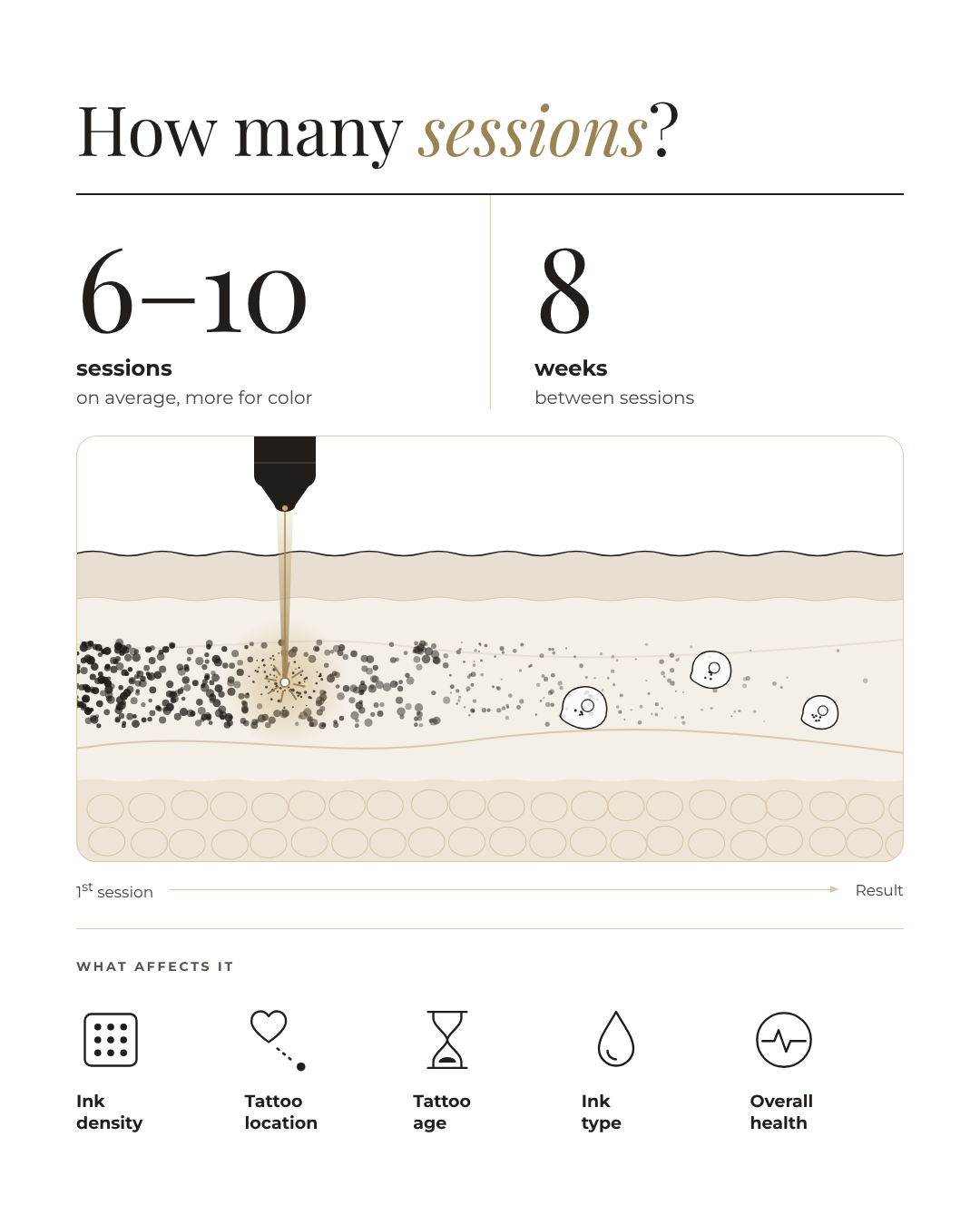
How your body gradually eliminates tattoo ink
On average, approximately 6 to 10 sessions may be needed to achieve satisfactory fading. Coloured pigments can require additional treatments because your body needs time to clear the fragmented ink particles.
Spacing your appointments appropriately is essential. An interval of approximately eight weeks is often recommended to allow your skin to recover and your body to continue clearing the pigment.
Several factors influence the number of sessions required. Ink density is particularly important, as heavily saturated professional tattoos generally take longer to treat.
Tattoo location also matters. Areas farther from the body’s central circulation may experience slower pigment clearance.
Other factors include:
Tattoo age
Type of ink used
Overall health
Results vary considerably. It is impossible to determine the exact number of sessions without assessing your tattoo. Every person’s skin responds differently to laser tattoo removal.
Complete removal or fading for a cover-up?
Sometimes, the goal isn’t to remove a tattoo completely but to lighten it before creating a new design.
Preparing your tattoo for a cover-up
Laser treatment can reduce the intensity of dark pigments, giving your tattoo artist more flexibility when designing a cover-up tattoo. This may help avoid the need for large areas of heavily saturated black ink.
This process is generally shorter than complete removal. A few sessions may be enough to significantly lighten the existing tattoo and create more possibilities for your new design.
Manon can adapt the treatment approach according to your future tattoo plans, taking into consideration the areas that need to be lightened.
This targeted approach allows specific sections of the original tattoo to be faded without necessarily removing the entire design.
Laser tattoo fading can be an effective way to prepare your skin for a new artistic project.
Why choose Clinique M for tattoo removal
Our commitment to your skin is reflected in our rigorous and compassionate approach.

Clinique M's commitment
With twenty years of experience in Montréal, our clinic has mastered the art of tattoo removal. An experienced hand considerably reduces patient stress. Precision technique ensures optimal comfort.
We prioritize the use of cutting-edge technologies to ensure your satisfaction. Our certified lasers deliver proven results. Medical safety remains our absolute priority for every treatment we provide.
We invite you to take advantage of a free consultation with our specialists. It is the ideal opportunity to address your questions. Contact our team to begin your tattoo removal journey with complete peace of mind.
FAQ
Yes, certain green and blue pigments can be treated with laser technology. However, these colours are more challenging and require appropriate wavelengths and treatment settings.
Advances in laser technology have expanded the possibilities for treating these pigments, although additional sessions may be necessary.
Red ink generally responds well to laser treatment. A specific wavelength, commonly 532 nm, is often used to target and break down red pigments.
Results are frequently favourable, making red one of the more responsive coloured inks.
Yellow and pastel pigments are among the most difficult to treat because they absorb laser energy less effectively. Black ink generally remains the easiest to target.
Green and blue pigments are also challenging and require specialized treatment settings.
For coloured tattoo removal, approximately 8 to 12 sessions may be needed. The number depends on ink saturation, pigment depth and the age of the tattoo.
Every case is different, and your initial assessment will help establish a more personalized estimate.
The risk of permanent scarring is minimal when the procedure is performed with a world-class medical laser and by a qualified expert. Temporary reactions, such as redness or slight swelling, are completely normal following the treatment.
The skin heals healthily if you strictly follow the post-treatment care protocols. Our absolute priority remains the preservation of your skin’s integrity throughout the entire removal process.
No. Complete removal cannot be guaranteed because tattoo ink composition and individual biological responses vary.
At Clinique M, we prioritize transparency and realistic expectations. Your skin’s response determines how quickly the pigment fades, and treatment settings are adjusted accordingly.

Manon Larivière
As the founder of Clinique M, Manon Larivière applies her expertise to a natural and personalized approach. She oversees the clinic’s vision, standards of care, and the trusting relationships built with each client.