

Laser tattoo removal: how many sessions does it take?
Laser tattoo removal typically requires a series of 6 to 10 sessions to achieve significant fading. However, the exact number varies from person to person and depends on several factors, including the type and colour of ink, pigment depth, age of the tattoo, its location, and your body’s ability to eliminate fragmented ink particles.
One of the most common questions we hear is: “How long will it take to remove my tattoo?” While no exact timeline can be guaranteed before an assessment, understanding the factors that influence the process can give you a much clearer idea of what to expect.
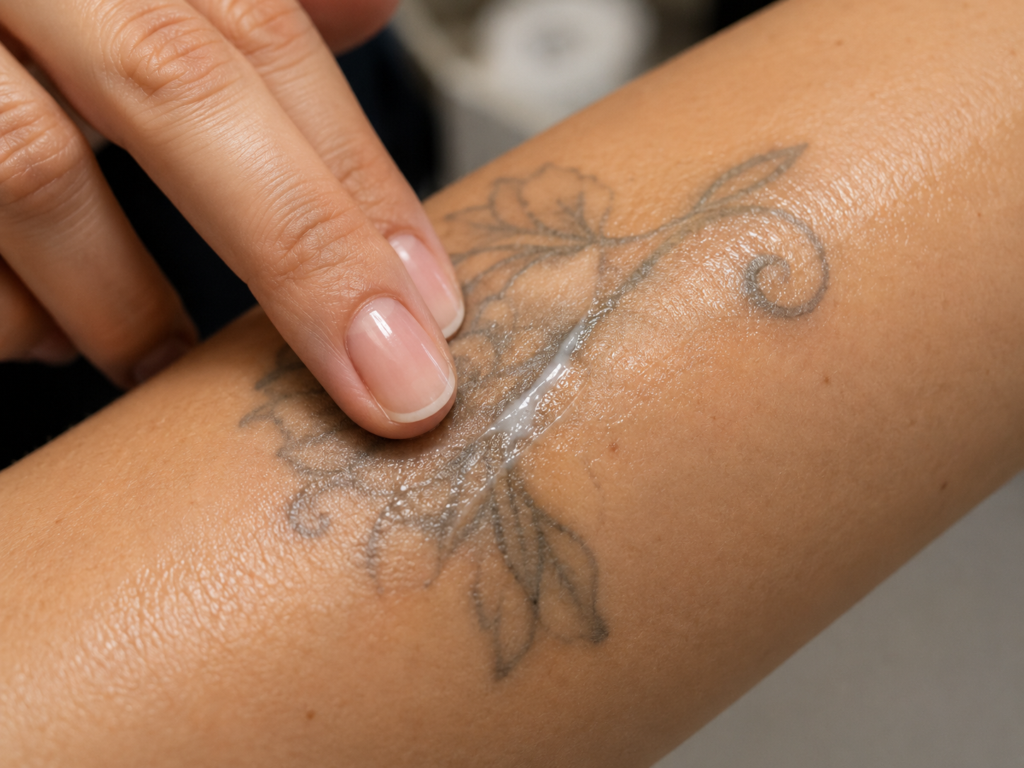
First, how laser removes a tattoo
Laser tattoo removal typically requires multiple sessions spaced 6 to 8 weeks apart. During each treatment, the Hollywood Spectra laser targets the tattoo pigment and breaks it into smaller particles, which are then gradually cleared by the body. Significant fading is possible, but complete removal cannot be guaranteed.
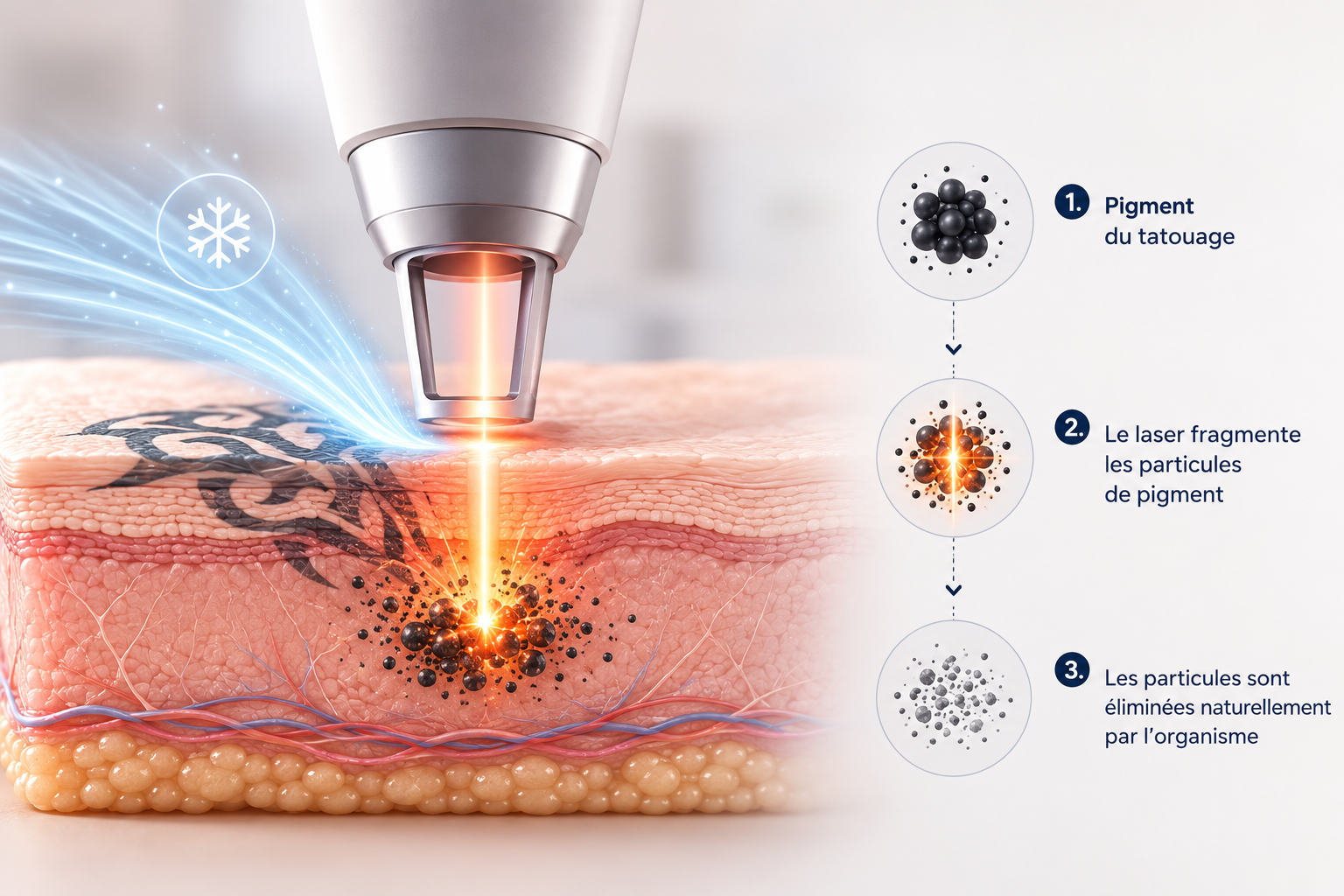
How the laser works
The laser delivers targeted energy into the tattoo pigment, breaking the ink into microscopic particles without physically removing it from the skin.
Over the following weeks, your immune and lymphatic systems gradually clear these fragmented particles. This natural process is why tattoo removal continues to progress even after the laser treatment itself is over.
At Clinique M, we use the Hollywood Spectra™ laser, a technology that allows us to target a wide range of tattoo colours using specific wavelengths. The technology used is important, but so is the expertise of the professional performing the treatment.
How many sessions, concretely?
Now that we’ve covered how laser tattoo removal works, let’s look at what most people really want to know: how many sessions will it take to fade or remove your tattoo?
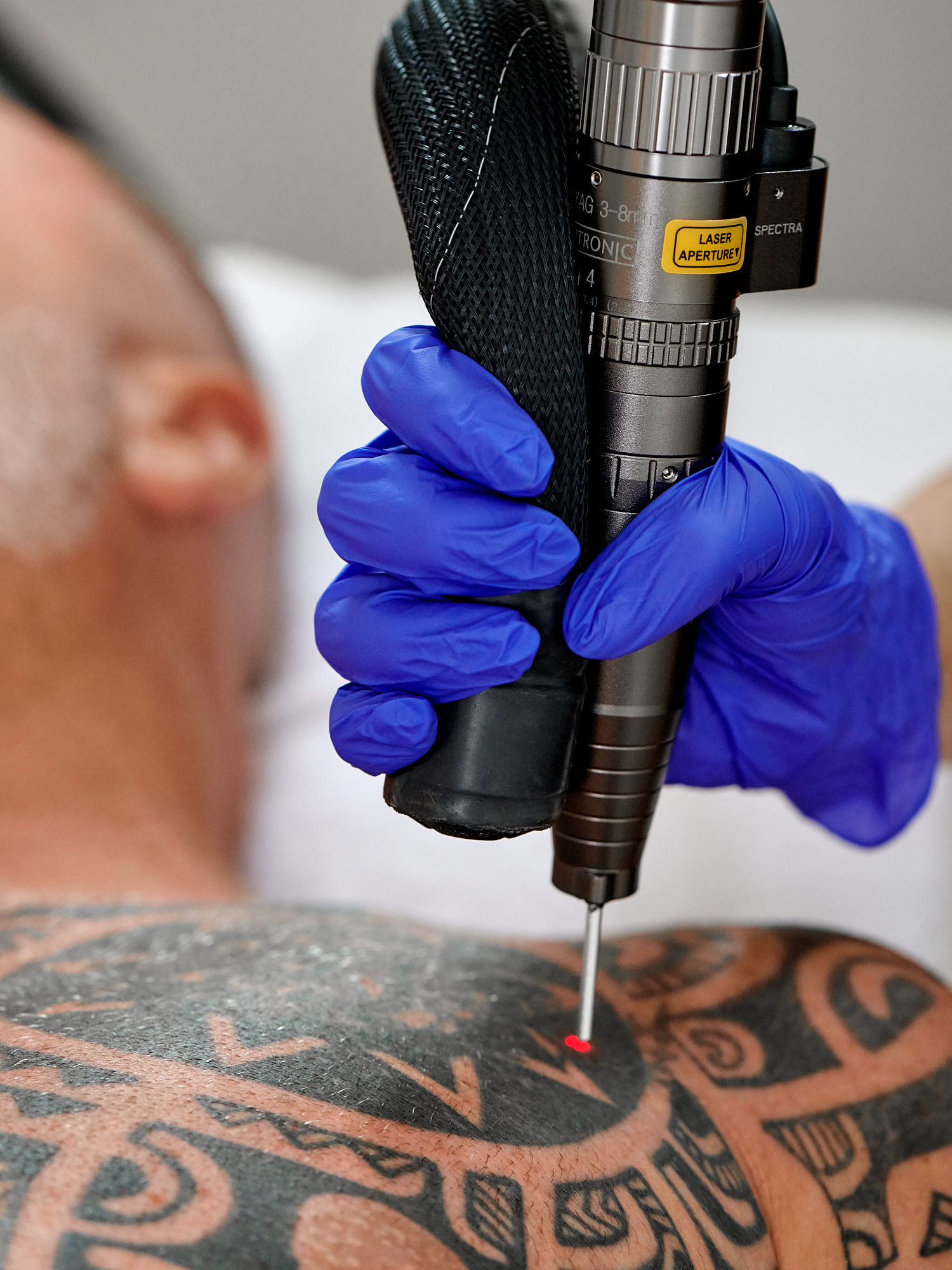
Estimating the number of sessions
Most laser tattoo removal treatments require approximately 6 to 10 sessions, with 6 to 8 weeks between appointments. This interval is important because your skin needs time to heal and your body needs time to gradually clear the fragmented ink particles.
Some tattoos may require fewer sessions, while others may need more than 10. The number depends on factors such as the tattoo’s colour, age, depth, density, location, and whether it was applied professionally or by an amateur.
Rather than focusing on an exact number from the start, it is more realistic to think of tattoo removal as a gradual process. Each session builds on the previous one, and your progress is reassessed throughout the treatment plan.
Tattoo removal is a gradual process. Each session builds on the last, while your body continues clearing the fragmented ink between treatments.
Can a Tattoo Be Completely Removed?
Complete tattoo removal is possible in some cases, but no clinic can responsibly guarantee that every tattoo will disappear entirely. The final result depends on the tattoo itself, the pigments used, your skin, and how your body responds to treatment.
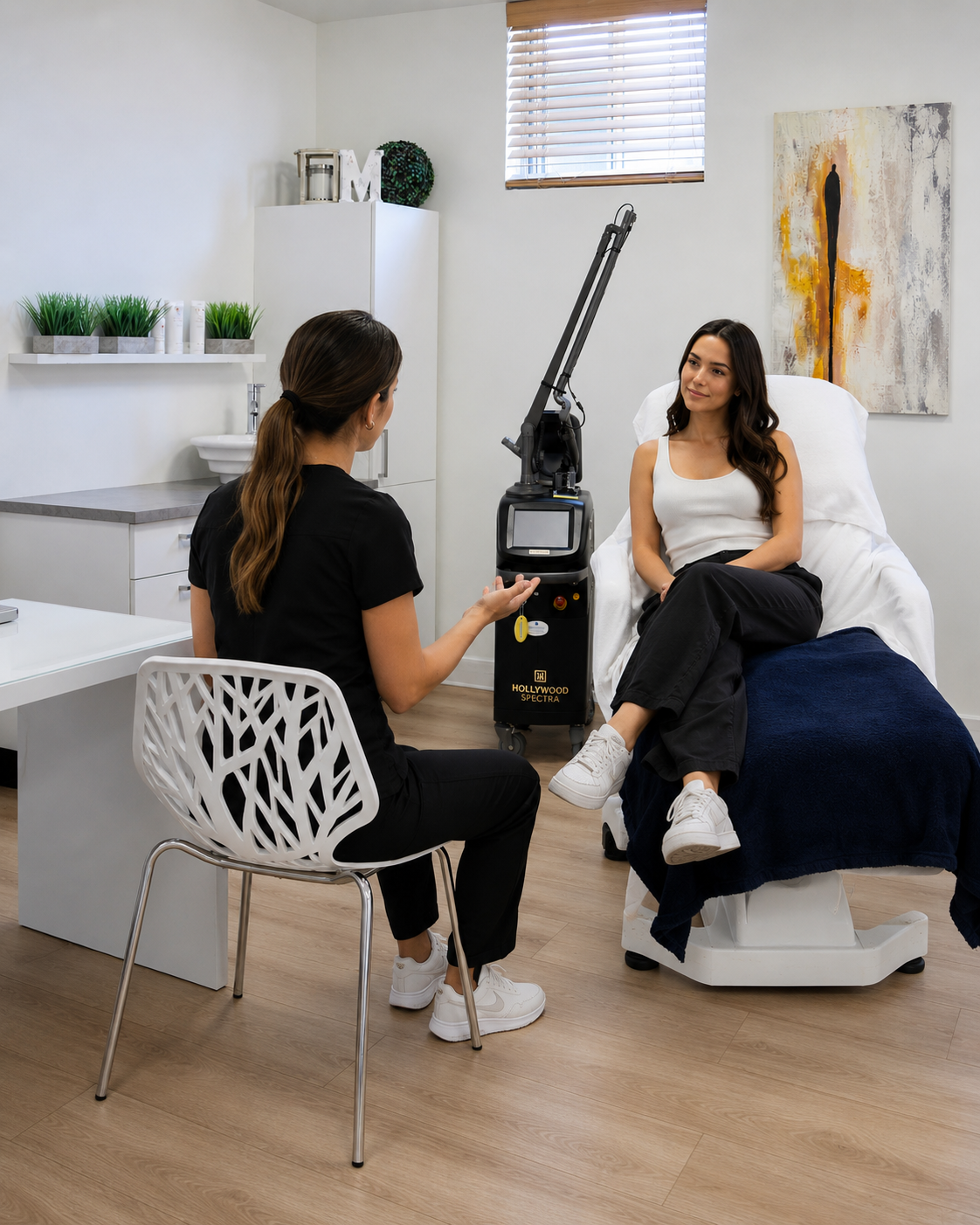
Setting Realistic Expectations
Many tattoos can fade dramatically, and some may become barely visible or disappear almost completely. However, 100% removal can never be guaranteed.
Certain ink colours, including some shades of green, yellow, and light blue, can be more resistant to treatment. Depending on the pigments used and how deeply they were deposited, a faint shadow or residual pigment may remain even after a complete treatment plan.
Our goal is to achieve the best possible fading while protecting the integrity of your skin. Your treatment settings and session intervals are therefore adjusted according to your tattoo, skin type, and response to previous sessions.
Why the Number of Sessions Varies
No two tattoos respond exactly the same way. Several biological and technical factors influence how quickly the ink fades and, ultimately, how many laser sessions may be required.
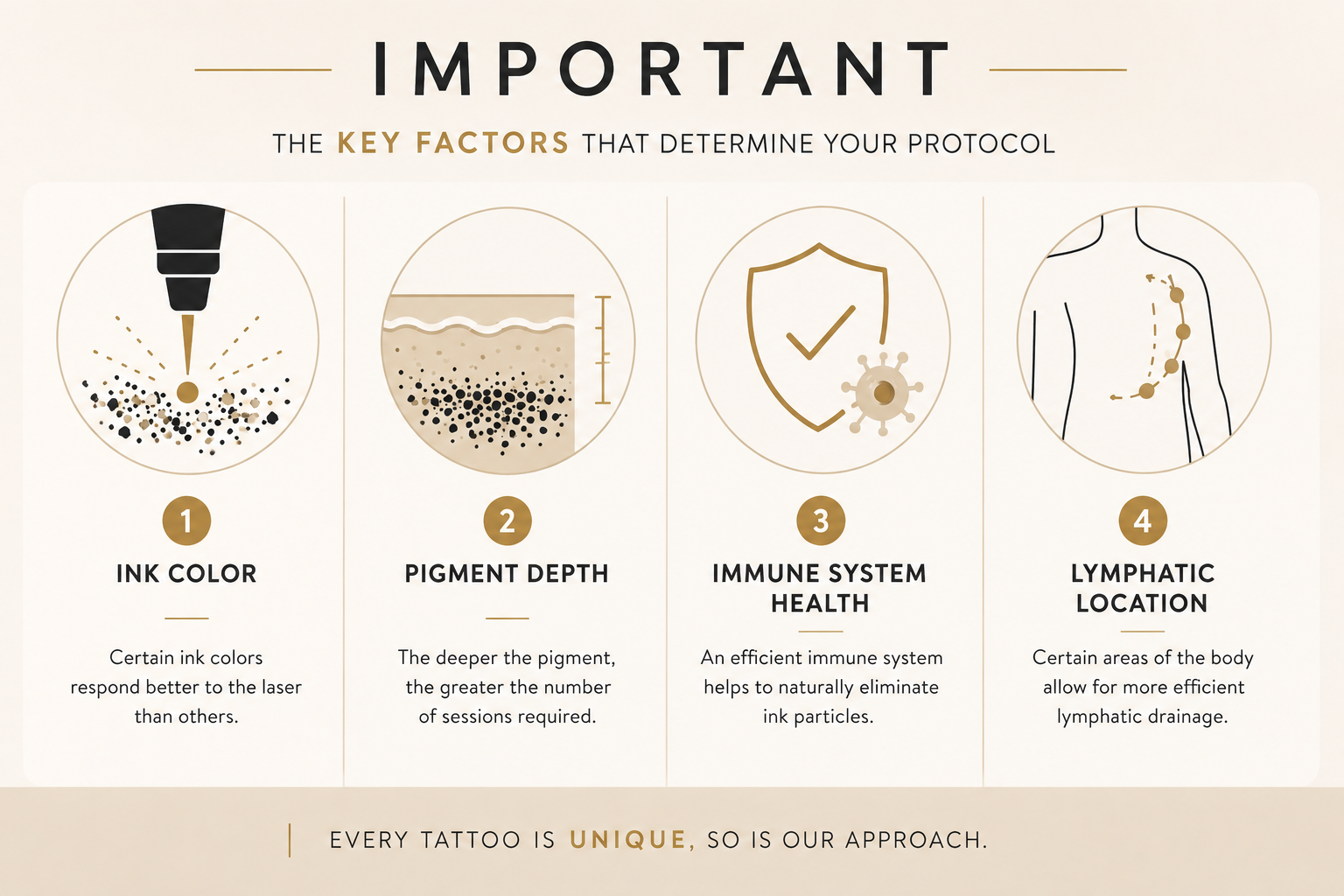
Factors influencing the number of sessions
The number of sessions you may need depends on several characteristics of the tattoo, including the amount of ink, pigment depth, colours, age, and location. Professional tattoos are often more densely saturated and may therefore require more sessions than lighter or amateur tattoos.
Your body also plays an important role. Once the laser fragments the pigment, your immune and lymphatic systems are responsible for gradually clearing those particles. This is one of the reasons results and treatment timelines can vary significantly from one person to another.
During your assessment, we consider several factors to estimate a realistic treatment plan, including:
- Ink colour
- Pigment depth and density
- Tattoo age and type
- Tattoo location
- Skin type
- Individual response to treatment
What Happens Between Laser Tattoo Removal Sessions?
Tattoo removal continues long after you leave the clinic. What happens during the weeks between treatments is an important part of the fading process.
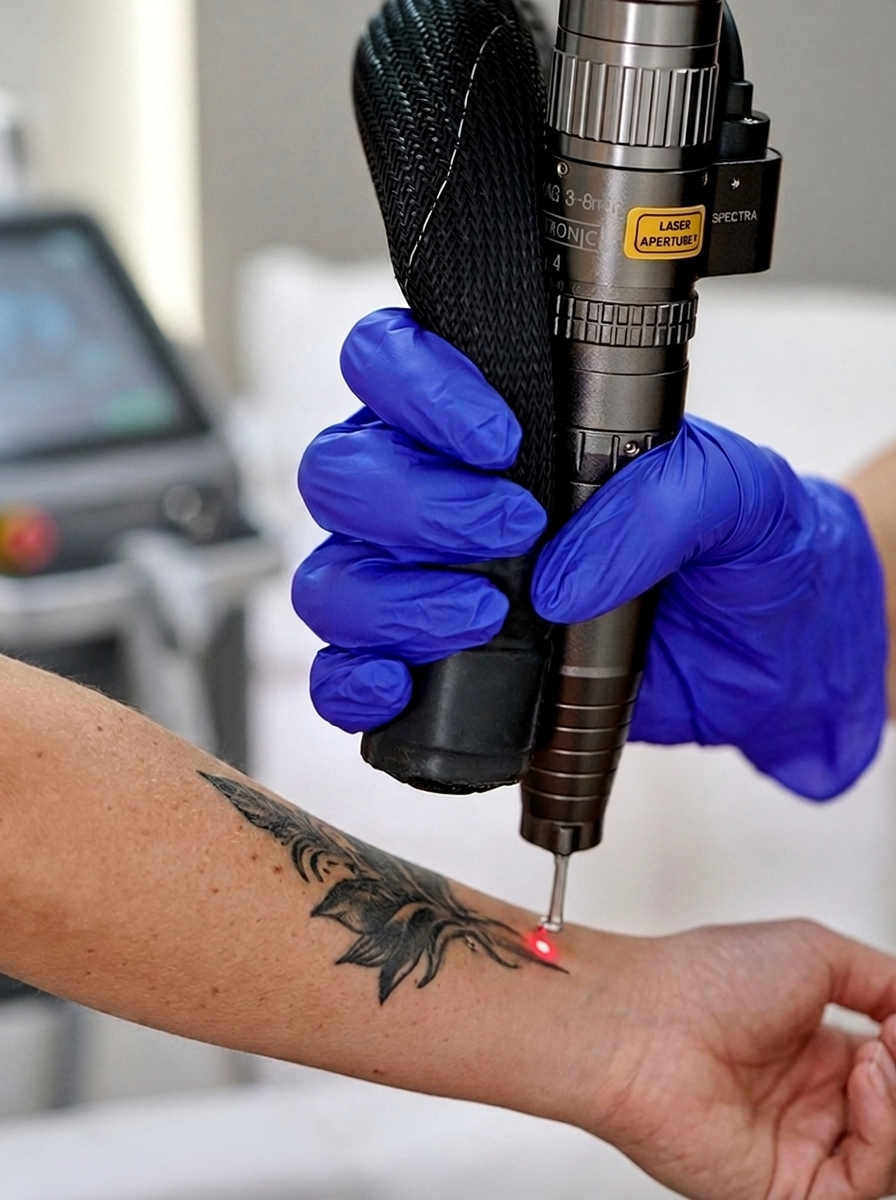
Healing and Fading Between Sessions
After each treatment, the fragmented tattoo pigment is gradually processed and cleared by your body. This takes time, which is why laser tattoo removal sessions are generally spaced several weeks apart.
Your skin also needs time to recover before it is treated again. Following the recommended aftercare instructions, protecting the treated area from sun exposure, and allowing the skin to heal properly can help reduce the risk of complications.
Most people can return to their usual activities relatively quickly, although temporary redness, swelling, sensitivity, or mild blistering may occur after treatment. Following your personalized aftercare instructions is essential throughout the process.
The Goal: Helping Your Tattoo Fade Safely
For many people, tattoo removal is about more than simply fading ink. It can be a way to remove an unwanted tattoo or prepare the area for something new.
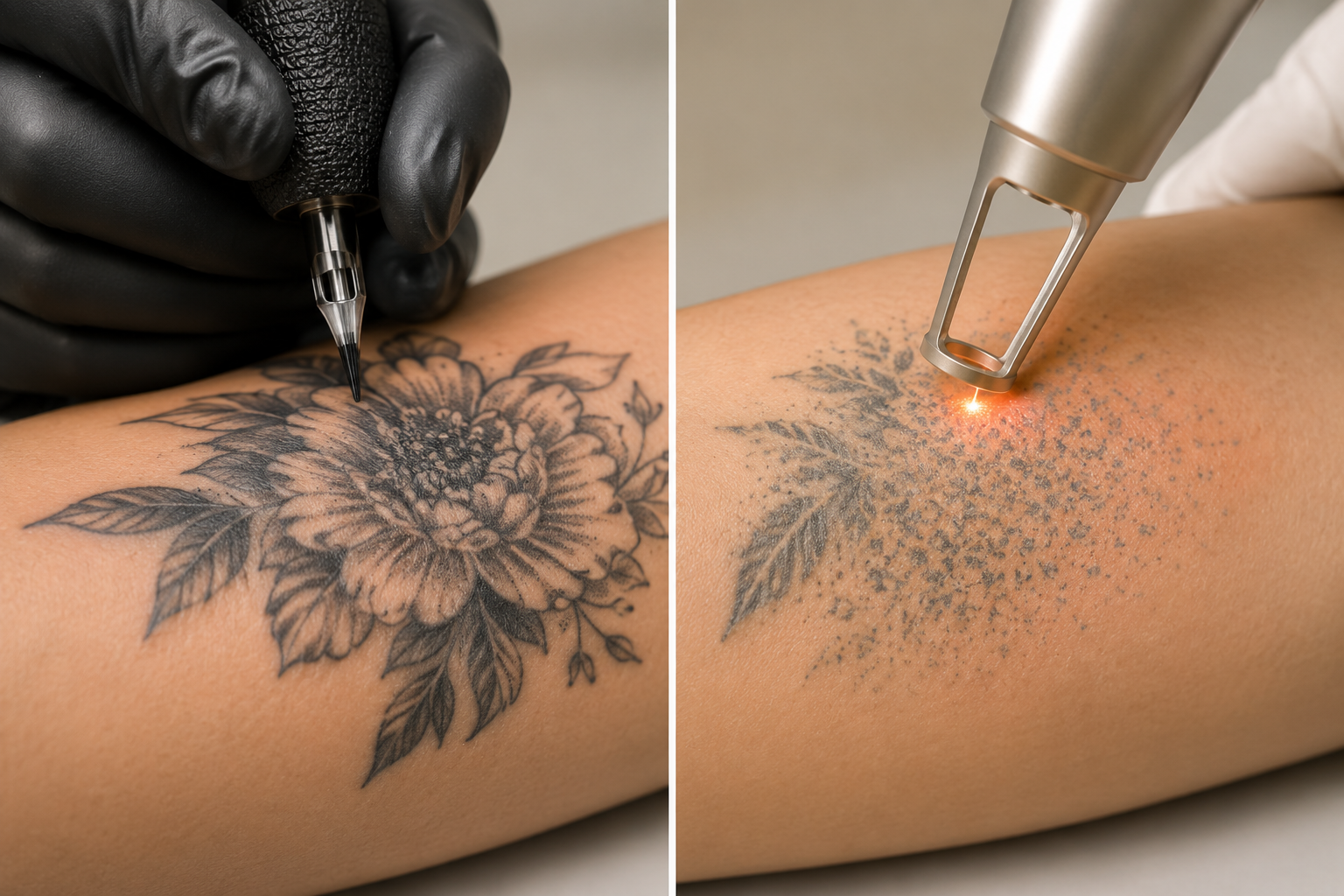
Results That Develop Gradually
Laser tattoo removal is a progressive treatment. The tattoo generally becomes lighter from one session to the next as your body continues to clear the fragmented pigment.
The final result will depend on your tattoo and your individual response to treatment. Some people want the tattoo removed as completely as possible, while others simply want enough fading to make a cover-up easier.
Whatever your goal, the treatment plan should focus on achieving meaningful fading while preserving the health and integrity of your skin.
The goal is not to rush the process, but to achieve the best possible fading while protecting your skin.
Why an Assessment Matters Before You Begin
Because every tattoo is different, an assessment is the best way to determine what you can realistically expect before beginning laser tattoo removal.
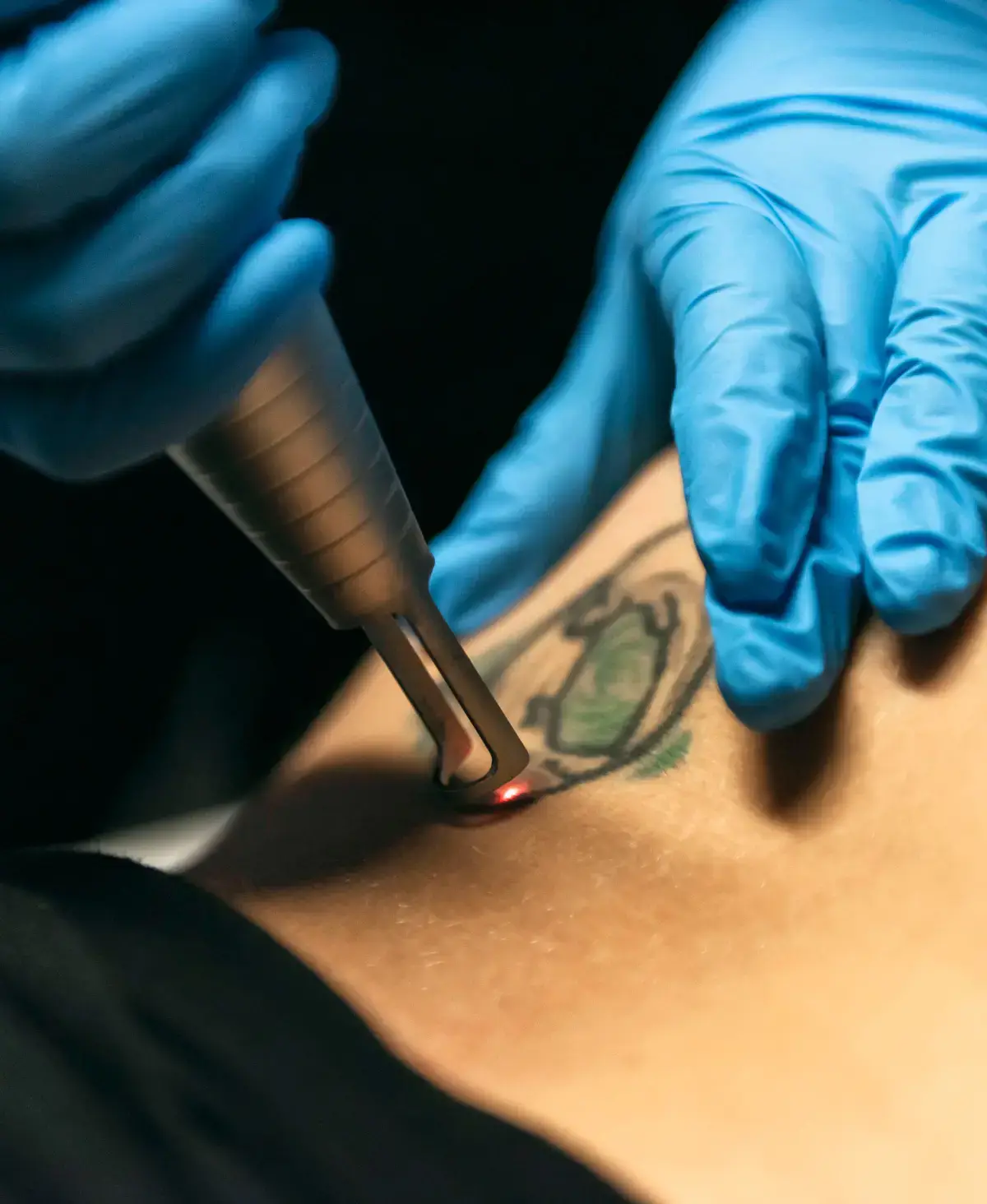
A Personalized Tattoo Removal Assessment at Clinique M
During your assessment, we examine your tattoo’s colour, size, density, depth, age, and location, as well as your skin type. These factors help us determine whether laser tattoo removal is appropriate for you and provide a realistic estimate of the number of sessions you may need.
At Clinique M in Montreal, each treatment plan is personalized rather than based on a one-size-fits-all protocol. We will explain how the treatment works, what results you can reasonably expect, and what you should know before your first session.
The assessment is also an opportunity to ask questions and understand the complete process before deciding whether you would like to move forward with treatment.
What Can Affect the Number of Sessions?
Variable
Black ink generally responds well to laser treatment, while certain colours may require additional sessions.
Positive
An older tattoo (15+ years) often fades more quickly.
Variable
Amateur: 3 to 5 sessions. Professional: 6 to 10+ sessions.
Significant
Deeper or denser pigment can require additional treatments.
Variable
The vascularity of the area facilitates ink elimination.
Variable
Our technologies effectively treat all skin types.
Major
An active lymphatic system accelerates the elimination of pigments.
Why Choose Clinique M for Tattoo Removal
Our commitment to your skin is reflected in our rigorous and personalized approach to laser tattoo removal.

Clinique M’s Approach to Laser Tattoo Removal
Clinique M has been providing aesthetic treatments in Montreal since 2003. Our approach to tattoo removal combines advanced laser technology with careful assessment and personalized treatment settings.
We use the Hollywood Spectra™ laser to target tattoo pigments while adapting the treatment to factors such as ink colour, pigment depth, tattoo location, and skin type. Every treatment plan is adjusted according to the individual rather than following the same protocol for every tattoo.
If you are considering laser tattoo removal, a consultation is the best place to start. We can assess your tattoo, discuss your goals, and give you a clearer idea of the number of sessions you may need and the results you can realistically expect.
FAQ
On average, a complete tattoo removal protocol requires between 6 and 10 sessions. This range can vary from 3 to 12 sessions depending on the complexity of the tattoo. At our clinic, we value honesty: every skin reacts differently, and the exact number of sessions depends on the initial ink saturation.
It is essential to understand that tattoo removal is a gradual process. At Clinique M, we find that results become significantly visible from the second or third session onward, as your immune system begins eliminating the fragmented pigments.
Absolutely. To optimize your comfort, we recommend applying a lidocaine-based numbing cream approximately one hour before your session. This topical treatment numbs the nerve endings at the surface and significantly reduces the perception of stinging.
Combining this local preparation with our cold air propulsion system during treatment ensures a comfortable experience. Your well-being is our absolute priority during every procedure at Clinique M.
The nature of the sensation is different: whereas tattooing involves repeated mechanical trauma, the laser works through ultra-rapid thermal shock waves. While approximately 60% of people find the impact more intense, nearly all of them note that the session is ten times shorter than sitting under the needle.
In short, if you had the endurance to get your tattoo in the first place, the removal process will not be an insurmountable obstacle. The brevity of the treatment is your greatest ally here.
Sensitivity varies depending on the physiology of the treated area. Regions where the skin is thin and close to bony structures, such as the ankles, wrists, ribs, or face, react more intensely to laser pulses.
Conversely, fleshier areas such as the thighs or shoulders offer better natural tolerance. Our experts systematically adjust the device settings based on the treatment area to minimize any unnecessary discomfort.
Post-treatment discomfort is mild and generally resembles the sensation of a moderate sunburn. This residual discomfort lasts only a few hours, while any redness or swelling typically subsides within 48 hours.
The careful application of a healing ointment and adherence to moisturizing instructions allow for a quick recovery. You will be able to resume your daily activities immediately after leaving the clinic.
No, the use of the Spectra Q-Switch Nd:YAG laser, approved by Health Canada, allows pigments to be fragmented without damaging the surrounding tissue. The technology is designed to target the ink exclusively, fully preserving the integrity of your skin.
By carefully following our post-tattoo removal care protocols, including strict sun avoidance, you will achieve clear, scar-free skin. Our expertise of more than twenty years in Montréal is your guarantee of safety.

Manon Larivière
As the founder of Clinique M, Manon Larivière applies her expertise to a natural and personalized approach. She oversees the clinic’s vision, standards of care, and the trusting relationships built with each client.