

Hair Loss in Women: Why PRP Is Effective
Hair loss affects nearly 40% of women before the age of 50, often causing widespread thinning that can affect self-confidence. Whether it’s related to hormonal changes or telogen effluvium, noticing your hair becoming thinner can quickly become a major source of anxiety.
PRP hair treatment for women has emerged as an advanced medical approach to revitalizing hair follicles and helping slow hair loss. In this article, we explain how this regenerative treatment works and how effective it can be in restoring hair density over time.
Understanding Hair Loss in Women
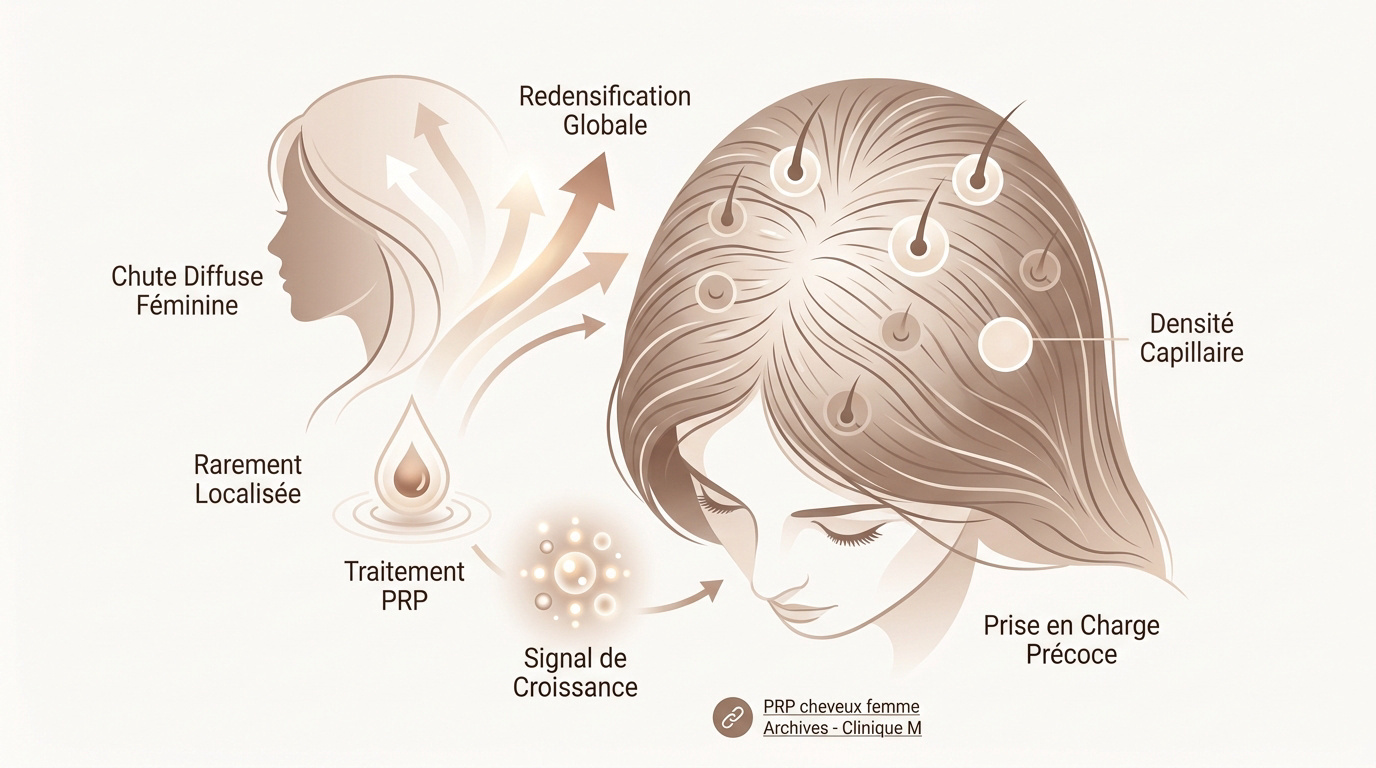
Female hair loss is often diffuse and may respond well to PRP when treatment begins early and hair follicles are still active. Adding exosomes can provide additional cellular signalling to support overall hair density.
This biological difference makes it essential to identify the underlying cause of hair thinning before developing a treatment plan.
In women, hair loss is rarely concentrated in specific areas as it often is in men. Instead, thinning tends to affect the scalp more generally. This fundamental difference changes the treatment approach. The goal isn’t necessarily to restore a receding hairline, but to improve overall hair density.
Hair loss in women is still a sensitive subject for many. Yet, numerous women seek medical advice because their hair is becoming noticeably thinner. Early intervention remains one of the most important factors in preserving existing hair.
PRP isn’t simply a cosmetic trend. It’s an autologous medical treatment that uses your body’s own resources to support hair follicle activity. The growth factors released by your platelets act on the follicles.
You can explore our previous articles on PRP hair treatment for women to learn more. A personalized assessment remains essential.
What Causes Female Hair Loss?
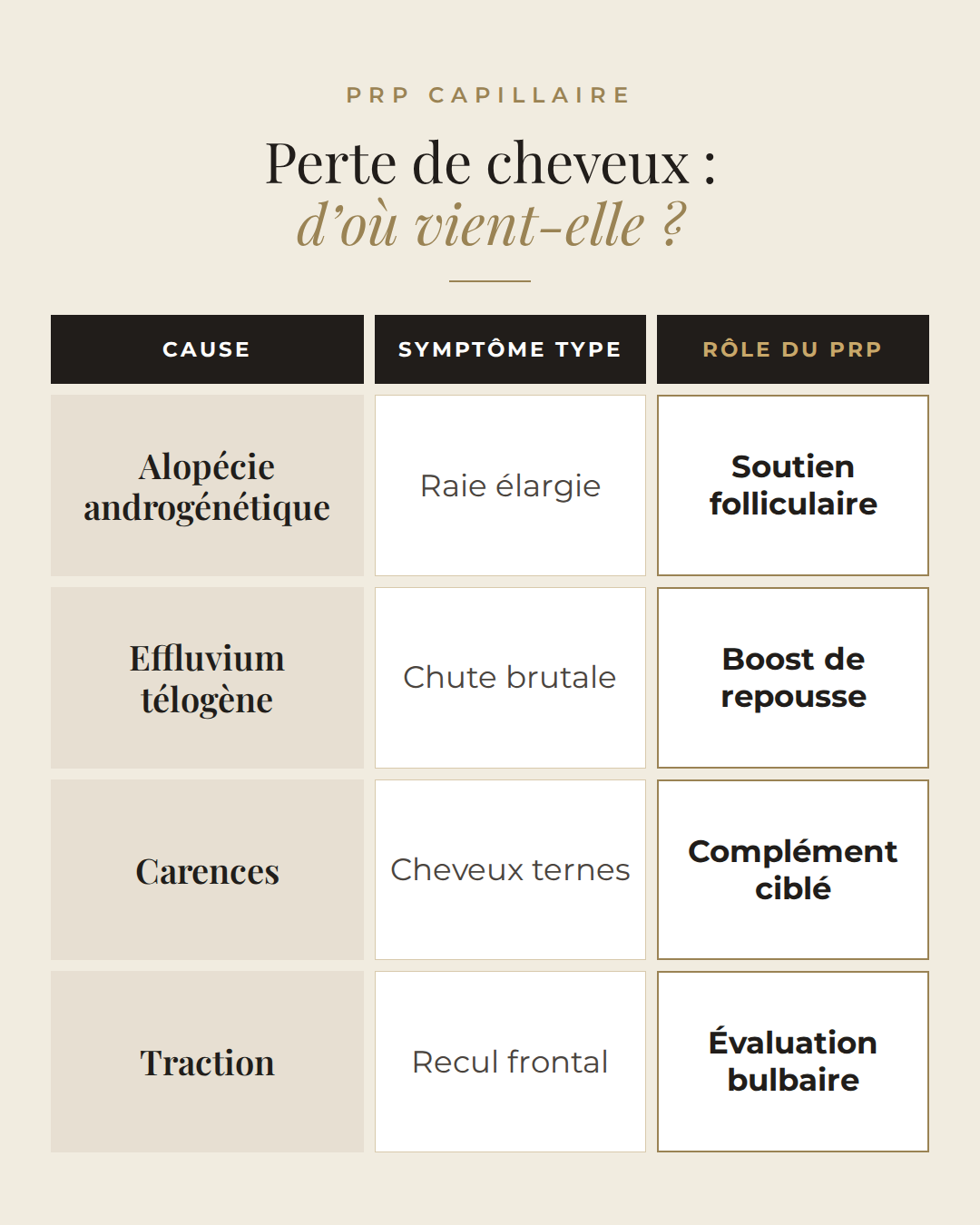
Common Causes of Female Hair Loss and the Role of PRP
Before considering treatment, it’s important to understand what’s causing your hair loss. Every type of hair loss has a different biological explanation.
Female pattern hair loss, also known as androgenetic alopecia, is associated with an inherited sensitivity to hormones. Hair gradually becomes finer with each growth cycle. PRP may help slow this progressive miniaturization and support the activity of existing hair follicles.
Telogen effluvium, which can occur following stress or childbirth, is often reversible. PRP may be considered to support the natural hair regrowth process.
However, blood tests remain essential in certain cases. Iron deficiency or thyroid disorders require appropriate medical treatment first. Injections cannot replace treatment of an underlying systemic condition.
Regulations surrounding platelet-based treatments vary by country. In Canada, their use is subject to medical and regulatory requirements designed to protect patient safety.
At Clinique M, identifying the cause of hair loss is the starting point. We don’t recommend treatment without first understanding the underlying condition. It’s essential for both safety and results.
Explore our alternatives to hair transplantation to learn more about our comprehensive approach. A personalized assessment will determine whether this treatment is appropriate for you.
Benefits of PRP Hair Treatment
Once the cause of hair loss has been identified, PRP can become an important part of the treatment plan thanks to its regenerative properties.
PRP uses a concentrated portion of your own blood to deliver growth factors to the scalp. The earlier treatment begins, the more active follicles there may be to support.
The process starts with a blood sample, which is placed in a centrifuge to separate and concentrate the platelets. This produces platelet-rich plasma, an autologous preparation used during treatment.
Once injected into the scalp, the platelets release signalling proteins known as growth factors. These molecules interact with cells involved in hair follicle activity and may help support the anagen phase, the active growth stage of the hair cycle.
Improved blood circulation around hair follicles.
Increased hair shaft thickness.
Reduced inflammation around the follicles.
This regenerative approach helps support the health of your existing hair. Discover our PRP hair treatment to learn more about our personalized protocol.
A thorough assessment is necessary to determine whether PRP is a suitable option for your specific type of hair loss.
It’s also important to understand that results are gradual. You shouldn’t expect dramatic changes within a week. Hair growth follows a natural biological cycle that requires time and patience.
Your comfort and peace of mind remain our priorities throughout the process. Our team provides professional, supportive guidance at every stage of your hair restoration journey.
The Role of Exosomes

Regenerative medicine continues to evolve, and exosomes represent another area of interest in advanced hair restoration treatments.
While PRP relies on your body’s own growth factors, exosomes are extracellular vesicles involved in communication between cells. They carry biological signals that can influence cellular activity.
Unlike PRP, which varies according to each patient’s blood composition, exosome-based preparations may offer a more standardized source of cellular signalling molecules.
To better understand the differences, explore our comparison of PRP and exosomes. This information can help you make a more informed decision about your treatment options.
Exosomes may be of particular interest for patients whose PRP contains lower concentrations of certain growth factors. Their potential to provide more consistent cellular signals is being studied in regenerative medicine.
However, it’s important to keep expectations realistic. Research into exosome-based hair treatments is promising but still evolving. We don’t promise miraculous results. The goal is to support the biological environment of the scalp, recognizing that each patient responds differently.
Potential Advantages of Exosomes
Enhanced cellular signalling.
Concentrated biological components.
Potential to complement PRP treatment.
The two approaches may complement one another as part of a personalized hair restoration plan.
Our Protocol with Dr. Narine
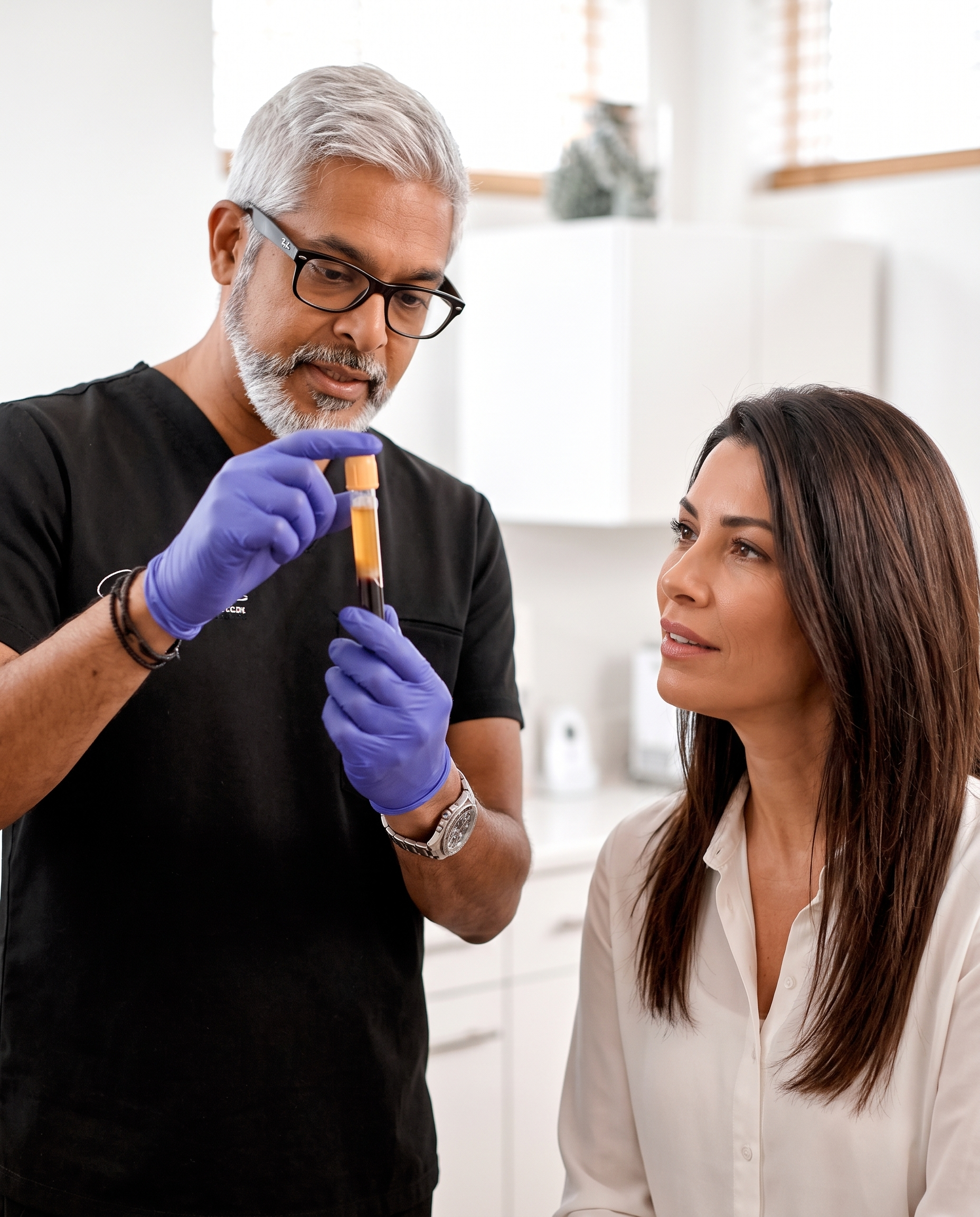
At Clinique M, we take a thorough, personalized approach to translating advanced hair restoration technologies into meaningful treatment plans.
Located in Montreal, Clinique M offers specialized hair restoration care under the supervision of Dr. Narine.
Each regenerative treatment protocol is developed according to the patient’s individual needs.
We don’t believe in one-size-fits-all solutions. Every patient receives a personalized assessment to identify the most appropriate approach.
Treatment sessions are designed with patient comfort in mind. The procedure is generally quick and minimally invasive, with medical safety protocols followed throughout.
Our approach also includes structured follow-up care over a period of 12 to 18 months.
Our expertise allows us to support patients throughout their hair restoration journey. To learn more about our specialized services, visit our hair restoration clinic in Montreal.
We believe in being transparent about our methods, treatment expectations and the care involved.
The initial consultation with our specialists involves a consultation fee.
However, the preliminary phone assessment is offered at no charge. This first step helps determine whether a medical consultation would be appropriate for your situation.
Understanding the financial commitment is also an important part of your decision. Explore our guide to PRP hair treatment costs in Canada for more information.
We understand the emotional impact that hair loss can have. Our team is committed to providing professional, compassionate care throughout your experience.
Dr. Nyan Narine's Approach at Clinique M
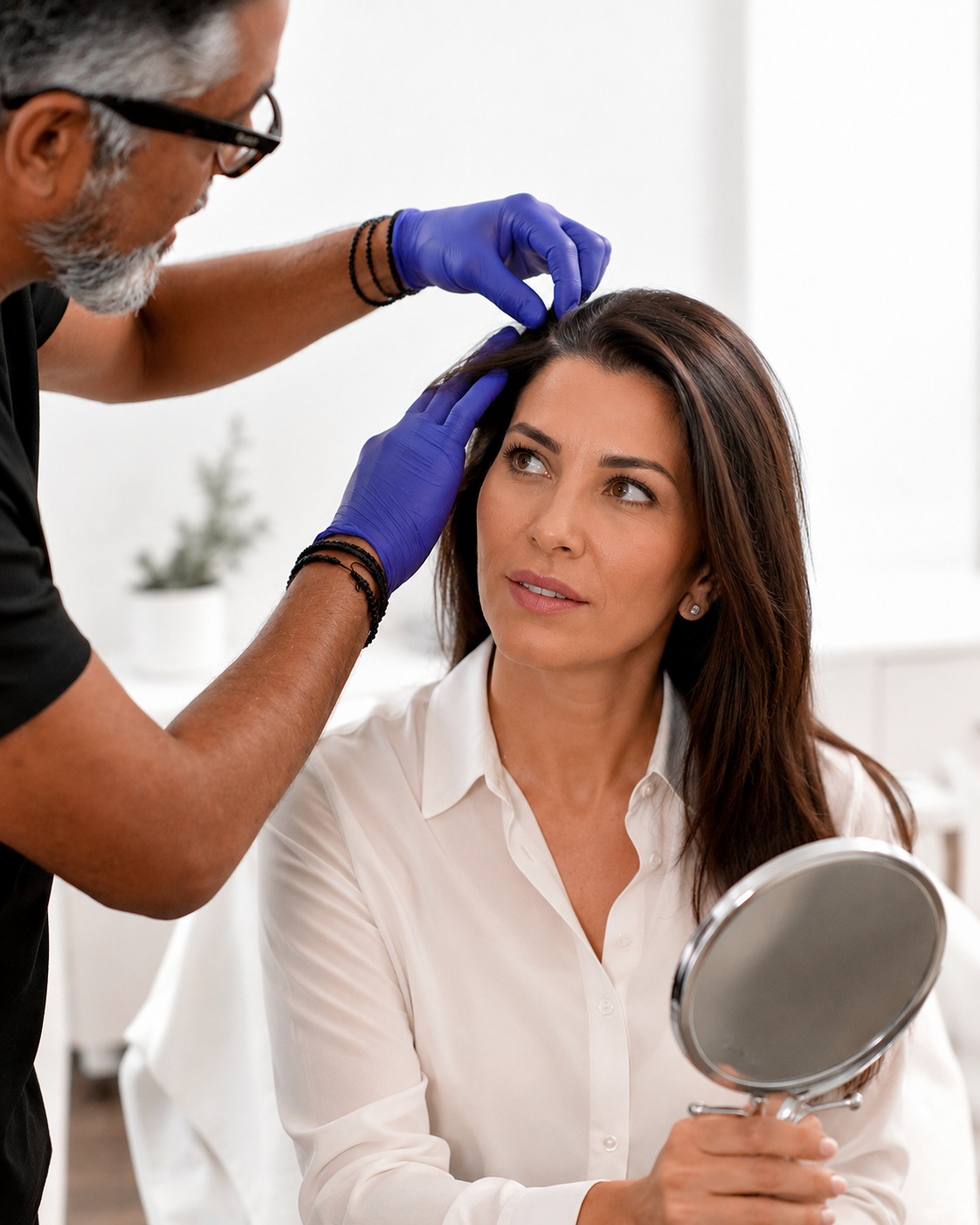
At Clinique M, we favour a rigorous medical approach for every patient. Dr. Narine systematically evaluates the health of your scalp. Here, no treatment is standardized. We seek the most lasting solution for you.
Personalization is our absolute standard. To learn more about our protocols, visit our dedicated page on hair treatments at Clinique M. We analyze your profile with precision.
Medical expertise makes all the difference. We sometimes combine technologies to maximize regrowth. This tailored strategy ensures consistent care that is adapted to your specific needs.
FAQ
Yes, PRP can be effective for certain types of female hair loss, particularly when treatment begins early and hair follicles are still active.
It helps support existing follicles and may improve hair density. However, PRP cannot restore hair in areas where follicles are no longer present.
A medical assessment is essential to confirm whether you’re a suitable candidate. Your individual condition will influence how well you respond to treatment.
These two approaches may complement each other rather than serve as direct alternatives.
PRP uses growth factors derived from your own blood, while exosomes provide extracellular signalling molecules being investigated for their regenerative potential.
A combined approach may be considered depending on your needs, although evidence supporting exosome treatments for hair loss is still developing.
The final choice depends on a detailed assessment of your scalp. Together, we’ll develop a personalized treatment plan.
The main goal is to improve hair density and support the overall health of your existing hair.
Although regrowth may occur, complete hair restoration is never guaranteed. Results vary according to each patient’s biological response.
Our primary objective is to help stabilize hair loss and improve hair shaft thickness. This process requires patience.
Not necessarily.
If an iron deficiency is identified, correcting it must be the priority. PRP may then be considered as a complementary treatment to support hair regrowth.
Blood tests are often an important first step. Addressing internal health factors is essential before proceeding with localized treatments.
You should expect to wait several months before noticing visible changes in your hair.
According to the treatment plan, improvements may continue over 12 to 18 months. Consistent follow-up is important.
Patience is essential, as the natural hair growth cycle is a slow process.
You’re certainly not alone. Female hair loss is extremely common, and many women experience similar concerns.
At Clinique M, we provide a confidential, professional and supportive environment where you can discuss your situation openly.
Talking about your concerns is often the first step toward finding an appropriate treatment.

Dr Nyan Narine
Medical Director of Clinique M, Dr. Nyan Narine (MD, FRCPC) specializes in internal medicine and bioregenerative medicine. He designs personalized protocols to treat hair loss.